
Many people in Tulsa begin looking for a functional medicine dentist when they feel that conventional dental answers are too narrow. They may have bleeding gums, recurring decay, old metal fillings, chemical sensitivities, autoimmune concerns or a sense that their mouth is affecting more than their smile.
A functional medicine dentist starts with a broader premise: the teeth, gums, saliva, jaw, oral microbiome and dental materials are part of the same biological system as the rest of the body. At Origin Dental Wellness in Tulsa, that perspective is led by Shannon Toler, DDS, BCHN, AIAOMT, FAAOSH, FMRII, a Biological Dentist and Board Certified Holistic Nutritionist.
This does not mean a dental visit replaces medical care or diagnoses systemic disease. It means dental decisions are made with the whole person in mind, especially for patients who are toxin-sensitive, immune-compromised or trying to live with a lower toxic burden.
What a functional medicine dentist means by mouth-body care
Functional medicine dentistry is not a separate dental specialty. It is a way of asking better clinical questions.
Instead of focusing only on whether a tooth has a cavity, a functional medicine dentist asks why the problem is happening, what the surrounding tissues are signaling and whether the planned dental materials or procedures fit the individual patient. This overlaps closely with our practice philosophy of health-centered dentistry, where the goal is not only repairing teeth but supporting long-term oral and whole-body wellness.
That lens changes the dental conversation. Bleeding gums are not treated as a routine inconvenience. Recurrent cavities are not reduced to brushing habits alone. Old restorations are not evaluated only by whether they are cracked or loose. A biologically minded dental visit considers oral bacteria, saliva quality, inflammation, airway patterns, bite forces, nutritional context, immune reactivity and material compatibility.
For patients in Tulsa and throughout Oklahoma who have complex health histories, that broader view can make the dental appointment feel more connected to the rest of their life.
The oral microbiome is part of your internal ecosystem
Your mouth contains a complex microbial community. Some organisms are helpful. Others become more problematic when the environment shifts, such as when plaque biofilm matures, saliva is dry, diet is high in fermentable carbohydrates or gum tissue becomes inflamed.
The National Institute of Dental and Craniofacial Research describes gum disease as an infection of the tissues that hold teeth in place, caused by plaque that hardens and allows bacteria to collect along and under the gumline. NIDCR also notes that people with diabetes are at higher risk for gum disease, which is one reason oral health is often discussed in the context of overall health.
From a biological perspective, plaque is not simply something to scrape away twice a year. It is a biofilm that can reveal patterns about the person’s oral environment. Dr. Toler may recommend salivary or biofilm diagnostics when more information is needed, especially for patients with persistent gum inflammation, recurrent decay or concerns about the oral-systemic connection.
A healthier mouth is not sterile. The goal is microbial balance, resilient gums and saliva that can help protect the teeth naturally. That is why a functional medicine dentist often talks about nutrition, hydration, pH, oral hygiene technique and immune resilience in the same conversation as dental cleanings or restorations.
Inflammation changes the treatment priorities
Bleeding gums are common, but they are not something a biological practice simply ignores. Gum inflammation can indicate that the immune system is responding to bacterial biofilm. The mouth is highly vascular, so inflamed gum tissue is not isolated from the rest of the body.
Organizations such as the American Academy for Oral Systemic Health focus on education around the connection between oral health and systemic wellness. In clinical practice, that connection does not mean every health condition begins in the mouth. It means the mouth can be one meaningful source of inflammatory burden, especially when gum disease, infected teeth or incompatible materials are present.
At Origin Dental Wellness, the question is not only whether gums look better after treatment. The question is whether the oral environment is becoming less inflamed, more balanced and easier for the body to maintain. That may involve periodontal therapy, biofilm management, home-care coaching, nutrition discussion or collaboration with the patient’s wider healthcare team when appropriate.
Materials matter, especially for sensitive patients
A functional medicine dentist pays close attention to what goes into the mouth because dental materials stay in close contact with living tissues for years. For patients with autoimmune concerns, metal sensitivity, chemical sensitivity or a history of unusual reactions, material choice is not a minor detail.
Origin Dental Wellness takes a biocompatible approach. That can include reviewing existing restorations, discussing material options before treatment and considering hypersensitivity testing such as MELISA when a patient’s history suggests it may be useful. The practice is also fluoride-free, which means prevention is built around saliva health, mineral balance, nutrition, biofilm control and individualized risk reduction rather than routine fluoride application.
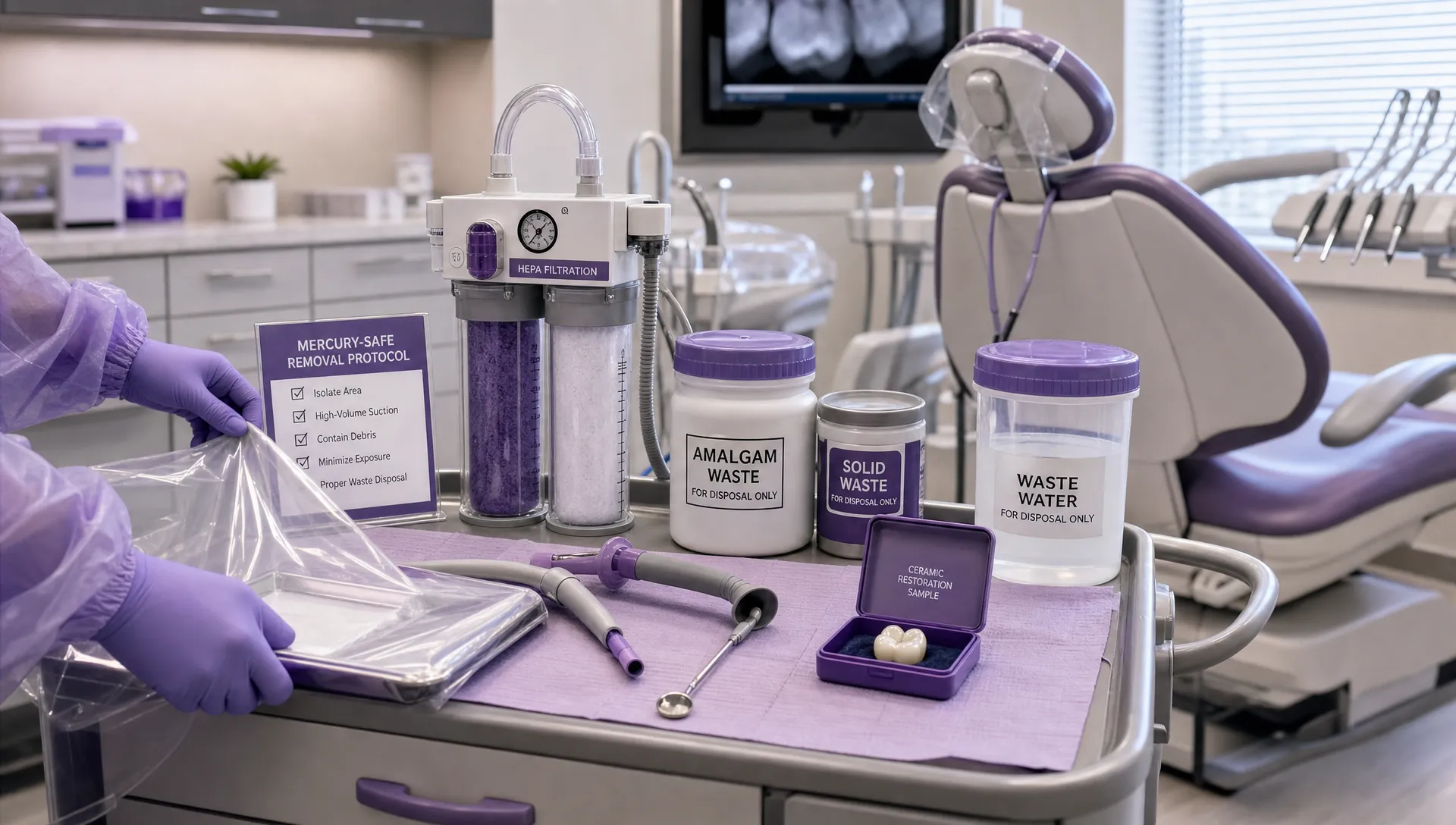
For patients with mercury amalgam fillings, our approach is cautious and protocol-driven. When removal is recommended, Origin Dental Wellness uses the IAOMT SMART approach, which is designed to reduce mercury exposure during the procedure. The International Academy of Oral Medicine and Toxicology outlines SMART as a set of safety measures for mercury amalgam removal, including specific barriers, filtration and suction strategies.
This is not about telling every person to remove every older filling immediately. It is about evaluating the condition of the restoration, the patient’s health history, their goals and the safest way to proceed if treatment is needed.
How the appointment looks different
A functional medicine dental visit often gathers more information than a problem-focused visit. The purpose is to understand patterns, not just repair isolated defects. If you want a deeper look at this kind of evaluation, our article on what a functional dentist looks for beyond cavities explains many of the same principles in more detail.
| What the mouth may reveal | Whole-body question a biological dentist may consider | Possible biological tools or discussions |
|---|---|---|
| Bleeding gums or heavy biofilm | Is the oral microbiome contributing to inflammatory burden? | Periodontal evaluation, biofilm diagnostics, home-care strategy |
| Recurrent decay | Are saliva, diet, minerals, dry mouth or pH part of the pattern? | Salivary testing, nutrition conversation, fluoride-free prevention plan |
| Old metal restorations | Could material exposure or sensitivity matter for this patient? | Restoration review, biocompatible materials, MELISA testing when appropriate |
| Nonvital or suspicious teeth | Is there a hidden infection or jawbone concern that needs evaluation? | Cone beam CT when indicated, biological treatment discussion |
| Clenching, wear or dry mouth | Could airway, sleep, stress or medications be influencing oral health? | Bite assessment, airway screening, referral when needed |

The exact tools used depend on the patient. A cone beam CT may be considered when three-dimensional imaging is needed. Ozone therapy may be used in certain procedures as part of a biological approach. PRP or PRF may be discussed for select surgical situations. NuCalm may be used to support relaxation for patients who feel anxious in the dental chair.
None of these tools are magic fixes. They are part of a clinical philosophy that tries to reduce unnecessary stress on the body and choose procedures that fit the patient’s biology.
Teeth are connected to immune and structural health
A functional medicine dentist also looks for problems that may not be obvious in a standard visual exam. This can include failing restorations, bone changes, infected areas, cavitations, bite trauma or signs that a tooth is no longer vital.
Origin Dental Wellness does not provide root canal therapy. From our biological point of view, when a nonvital or infected tooth is suspected, Dr. Toler discusses options that align with the patient’s health history, imaging findings and goals. The recommendation is individualized, and patients are encouraged to ask questions so they understand the benefits, limitations and risks of each option.
This approach is especially relevant for patients with chronic inflammatory concerns, immune challenges or a history of unresolved dental symptoms. A biological evaluation does not assume every systemic issue has a dental cause, but it does take the possibility of oral contributors seriously.
Nutrition is not separate from dentistry
Because Dr. Toler is also a Board Certified Holistic Nutritionist, nutrition is part of the way Origin Dental Wellness thinks about prevention and healing. Teeth are mineralized structures. Gums are living tissues. Saliva is influenced by hydration, medications, blood sugar patterns, mouth breathing and diet.
A patient with frequent cavities may need more than a stronger toothpaste recommendation. A patient with inflamed gums may need more than a deeper cleaning. A biological dental conversation may include protein intake, mineral availability, digestive concerns, snacking frequency, acidic beverages, dry mouth and how the patient’s overall lifestyle affects the oral environment.
This does not mean every dental patient receives the same nutrition advice. It means oral health is interpreted in context. For preventive-focused adults and health-curious families, that education can be one of the most valuable parts of a functional medicine dental visit.
The nervous system and environment affect the mouth too
Many patients underestimate how much stress, sleep and the home environment influence oral health. Clenching and grinding can accelerate wear. Poor sleep can contribute to dry mouth or mouth breathing. Anxiety can make patients postpone treatment until problems become more complex.
A biological approach does not treat these as unrelated details. It considers whether the dental visit itself can be made calmer and whether daily routines are supporting recovery. Some patients already audit their homes for lower-toxicity cleaning products, better air quality, filtered water and sleep-supportive evening habits. Even lighting can play a role in creating a calmer routine, and resources for customizable modern lighting may help patients design spaces that feel more restful and intentional.
In the dental office, comfort measures such as NuCalm may be considered for relaxation. The larger goal is to reduce avoidable stress, because a patient who feels safe and informed is more likely to complete needed care.
What makes this approach different in Tulsa
Origin Dental Wellness is a single-dentist biological practice in Tulsa, Oklahoma. That matters because the philosophy is consistent. Patients are not moving between multiple dentists with different treatment styles. Dr. Toler leads the clinical approach, and our team supports the same biological principles throughout the appointment.
For some patients, the difference is the level of investigation. For others, it is the attention to materials, mercury-safe protocols, fluoride-free prevention or the willingness to discuss how the mouth may relate to immune, gut or inflammatory concerns. Our article on why integrated dental care supports better health expands on how dentistry can fit into a wider wellness plan.
This is not the fastest or most minimal version of dentistry. It is designed for people who want to understand what is happening, why it may be happening and how to make dental decisions with whole-body health in mind.
Who may benefit from a functional medicine dentist
A biological dental approach may be a good fit if you want a more comprehensive explanation of your oral health or if past dental visits left important questions unanswered.
Common reasons patients seek this type of care include:
- Concern about mercury amalgam fillings or safe removal protocols
- Sensitivity to metals, chemicals, fluoride or dental materials
- Gum inflammation, chronic bleeding or recurring biofilm issues
- Recurrent cavities despite regular dental care
- Autoimmune, gut, immune or inflammatory health concerns
- Interest in salivary testing, biofilm diagnostics or biocompatibility
- Desire for a fluoride-free, low-toxicity dental philosophy
- Dental anxiety and interest in a calmer appointment experience
A functional medicine dentist is not only for people with complex health histories. It can also benefit patients who are simply prevention-focused and want a more educated, personalized plan.
Frequently Asked Questions
What is a functional medicine dentist? A functional medicine dentist looks at oral health in the context of the whole body. This includes gums, bacteria, saliva, nutrition, dental materials, inflammation, airway patterns and patient sensitivity. It does not replace medical care, but it can help identify oral factors that may affect overall wellness.
Is a functional medicine dentist the same as a holistic dentist? The terms overlap, but they are not always identical. At Origin Dental Wellness, the approach is biological and holistic, with an emphasis on biocompatible materials, oral-systemic health, fluoride-free prevention, SMART mercury removal, nutrition and low-toxicity care.
Can dental problems cause chronic disease? Dental problems do not explain every chronic condition. However, gum disease, oral infections, inflamed tissues and incompatible materials may contribute to inflammatory burden in some patients. A biological dentist evaluates these oral factors and may coordinate with the patient’s medical team when appropriate.
Why does Origin Dental Wellness avoid routine fluoride and root canal therapy? Our approach is fluoride-free and does not include root canal therapy because Dr. Toler chooses protocols that align with her biological dentistry philosophy. Prevention focuses on saliva, nutrition, minerals, microbiome balance and individualized risk factors. When a nonvital or infected tooth is suspected, options are discussed based on the patient’s situation.
Do I need to remove my mercury fillings? Not automatically. The condition of the filling, your symptoms, your health history and your goals all matter. If mercury amalgam removal is recommended, Origin Dental Wellness uses SMART protocol precautions to reduce exposure during the procedure.
Does Origin Dental Wellness see patients outside Tulsa? Yes. The practice serves Tulsa and the surrounding metro, including Broken Arrow, Jenks, Bixby, Owasso and Sand Springs. Patients also travel from Oklahoma City and neighboring states for biological dental care.
Connect your dental care with your whole-body health
If you are looking for a functional medicine dentist in Tulsa, Origin Dental Wellness offers a biological, low-toxicity approach for patients who want more than a quick look at their teeth. Dr. Shannon Toler and our team evaluate oral health through the lens of microbiome balance, inflammation, material compatibility, nutrition and the mouth-body connection.
Whether you live in Tulsa, the surrounding Oklahoma metro or are considering traveling from Oklahoma City or a neighboring state, you can contact Origin Dental Wellness to learn whether this comprehensive approach is the right fit for your health goals.