
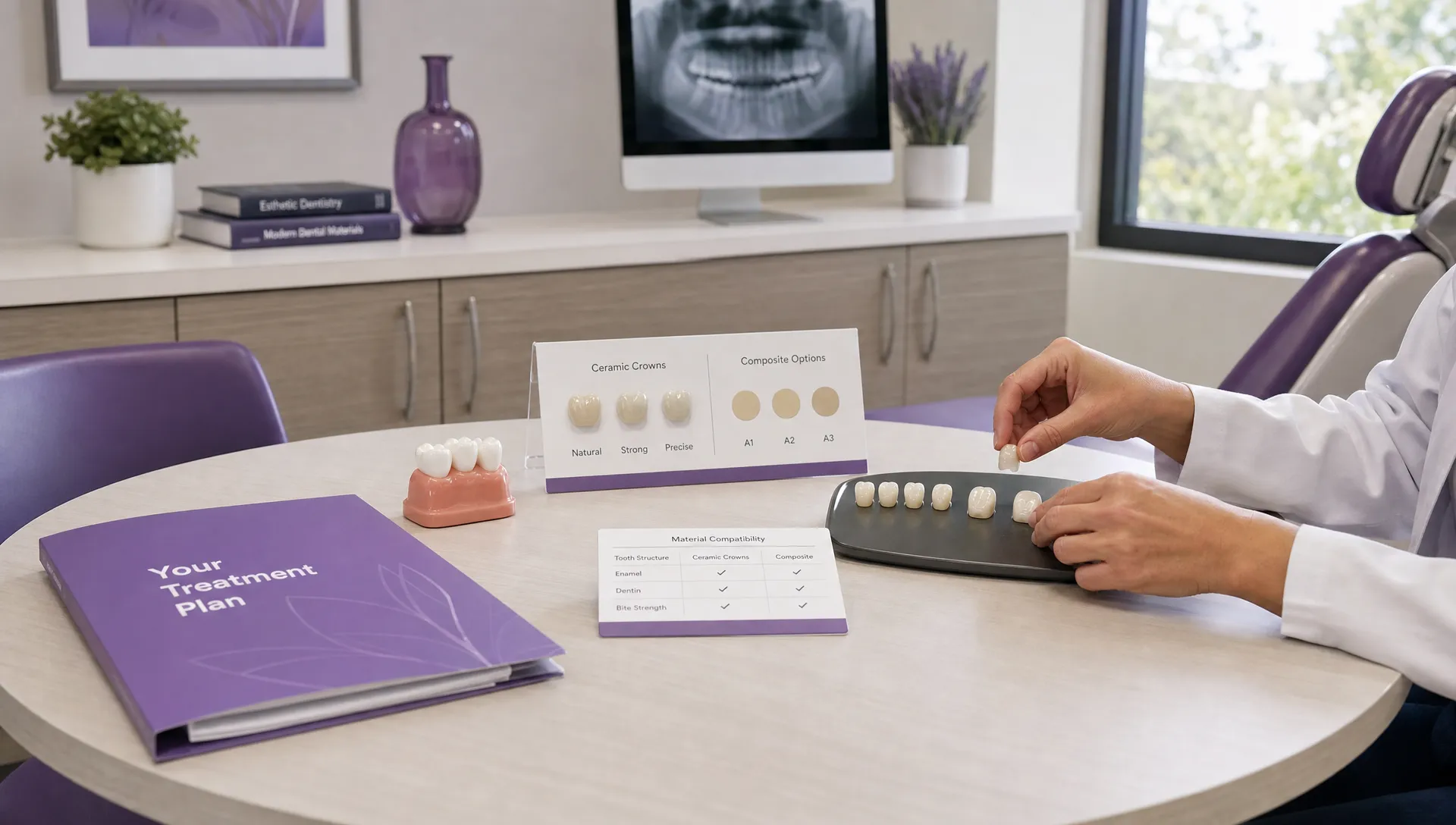
Bioidentical dentistry sounds like it should mean dental materials that are exactly the same as your natural teeth. In real clinical care, the meaning is more nuanced. Dental restorations are not living enamel or dentin, so they cannot be truly identical to the body. The goal is to choose materials that behave as respectfully as possible inside a unique human system.
For health-conscious patients in Tulsa and the surrounding metro, that distinction matters. A filling, crown, implant component or bonding material is not just a dental repair. It is something that may stay in your mouth for years, exposed to saliva, chewing forces, temperature changes, bacteria and immune activity every day.
At Origin Dental Wellness, bioidentical dentistry means looking at dental materials through a biological lens: compatibility, low toxicity, immune response, oral microbiome balance, durability and whole-body context. Under the care of Shannon Toler, DDS, BCHN, AIAOMT, FAAOSH, FMRII, dental material decisions are not treated as one-size-fits-all choices.
Bioidentical dentistry is about biological compatibility
The term bioidentical dentistry is not a formal dental specialty. It is best understood as a patient-friendly way to describe a biological approach to material selection. Instead of asking only, “Will this fix the tooth?” a biological dentist also asks, “How will this material interact with this person?”
That question becomes especially important for patients who are toxin-sensitive, immune-compromised, concerned about mercury, reactive to metals or trying to reduce unnecessary chemical exposure. Two people may need the same type of restoration, but their ideal material choices may differ because their health history, allergies, oral environment and existing dental work are different.
This is where biological dentistry separates itself from a generic materials conversation. Strength and appearance still matter, but they are not the whole story. A material can look beautiful and still be a poor fit for a patient with known hypersensitivity. Another material may be technically common, but not aligned with a low-toxicity philosophy.
The National Institute of Dental and Craniofacial Research emphasizes that oral health is connected to overall health in its Oral Health in America report. A biological dental practice applies that same principle to restorative choices. The mouth is not separate from the rest of the body, and dental materials do not exist in isolation.
Why dental materials matter beyond the tooth
Every dental material has properties. Some are rigid, some are flexible. Some contain metals, some are ceramic-based, some are resin-based. Some release trace substances as they age. Some interact with neighboring metals. Some accumulate more plaque depending on surface texture and placement.
In conventional dentistry, the discussion often centers on mechanical performance: how long the restoration may last, whether it can withstand chewing and how natural it looks. Those questions are valid. Bioidentical dentistry adds another set of questions.
A biological material review may consider:
- Whether the material contains ingredients the patient is trying to avoid
- Whether there is a history of metal sensitivity, chemical sensitivity or autoimmune concerns
- How the material may affect the gum tissue and oral biofilm
- Whether old metals in the mouth could create galvanic or inflammatory concerns
- Whether the restoration supports long-term function without adding unnecessary toxic burden
For example, a patient with multiple old restorations, bleeding gums and fatigue deserves a different level of inquiry than someone who simply chipped a tooth. The restoration still needs to protect the tooth, but the clinical conversation should not stop there.
This is also why patients may notice different language across dental offices. A practice focused on general family dentistry and wisdom tooth care in Geelong may organize services by treatment category, while a biological practice organizes many decisions around compatibility, oral-systemic health and patient-specific risk. Both may care deeply about patients, but the philosophy behind material selection can be quite different.
What “bioidentical” means for common dental materials
Bioidentical dentistry does not mean every patient gets the same “natural” material. It means the material choice is matched as closely as possible to the patient’s biology and clinical need.
| Dental need | Conventional material question | Biological material question |
|---|---|---|
| Fillings | Will it restore the cavity? | Is it strong, esthetic and appropriate for a low-toxicity plan? |
| Crowns | Will it protect the tooth? | Is the crown material compatible with the patient’s tissues, metals history and bite forces? |
| Implants | Will it integrate and function? | Is the implant material appropriate for the patient’s immune history, bone health and hypersensitivity profile? |
| Whitening | Will it brighten the smile? | Can cosmetic goals be pursued while minimizing irritation and sensitivity? |
| Replacing old dental work | Is the restoration failing? | Should removal be planned with exposure reduction, biofilm control and whole-body stress in mind? |
This table is simplified, but it captures the mindset. A biological practice does not choose materials only from a catalog. The patient’s biology is part of the decision.
If you want a deeper look at the broader selection process, Origin Dental Wellness has also explained how a biological dentist chooses safer materials from a whole-body perspective.
How Dr. Toler evaluates dental materials
At Origin Dental Wellness in Tulsa, material decisions are made after a comprehensive evaluation, not from a quick glance at one tooth. Dr. Toler may consider your medical history, dental history, current restorations, periodontal condition, oral biofilm, symptoms, airway factors, nutritional context and known sensitivities before recommending a specific restorative path.
This does not mean every patient needs every test. It means the clinical judgment is individualized. For patients with a history of metal allergies, chemical sensitivity or unexplained reactions to previous dental work, hypersensitivity testing may be discussed. In some cases, testing such as MELISA may help inform the conversation around metals, though no single test replaces a full clinical evaluation.
For patients with old amalgam fillings, Origin Dental Wellness uses a mercury-safe approach. The IAOMT describes the SMART protocol as a set of precautions intended to reduce mercury exposure during amalgam removal. From a biological perspective, the “how” of removal matters as much as the decision to replace the material.
Material categories through a biological lens
Composite fillings
Tooth-colored composite fillings are common, but not all composites are identical. Resin chemistry, filler content, polishability and handling characteristics vary by product. A biological practice looks for materials that meet the restorative need while aligning with a lower-toxicity approach whenever possible.
This matters because fillings live in a wet, active environment. They must seal well, resist wear and avoid creating plaque traps at the margins. A beautiful filling that irritates tissue or fails early does not serve whole-body wellness.
Ceramic and porcelain restorations
Ceramic materials are often appealing in bioidentical dentistry because they can be metal-free, esthetic and stable when properly selected and placed. Crowns, onlays and veneers may use ceramic options depending on the tooth, bite, esthetic goals and remaining tooth structure.
Still, “ceramic” is not a magic word. Material thickness, bonding approach, occlusion and patient habits all affect performance. Dr. Toler’s role is to weigh the biological preference for compatibility with the mechanical demands of the tooth.
Metals and metal sensitivity
Some patients tolerate dental metals without obvious symptoms. Others have known sensitivities or prefer to avoid metals when suitable alternatives exist. Bioidentical dentistry takes those concerns seriously rather than dismissing them as unrelated to oral care.
This can be especially relevant when patients have multiple metals in the mouth, unexplained oral burning, chronic inflammation around restorations or a history of jewelry reactions. A biological review may include existing crowns, posts, partial denture components, implants and past reactions to dental materials.
Dental implants
Implant material selection should consider more than strength. Bone health, immune status, oral infection, periodontal stability, bite forces and material sensitivity all matter. Some patients may be candidates for titanium implants, ceramic implant options or other approaches depending on their anatomy and health profile.
For patients comparing implant options in Oklahoma, Origin Dental Wellness has discussed why biocompatible dental implants may be a better choice for Tulsa patients. The key is not choosing a material because it is trendy. The key is choosing what fits the person and the clinical situation.
Materials used during removal and healing
Bioidentical dentistry is not only about the final restoration. It also includes what happens during the procedure. Irrigants, bonding agents, impression materials, barriers and healing support all contribute to the patient’s exposure picture.
This is one reason biological practices may incorporate tools such as ozone therapy, PRP or PRF when clinically appropriate. These are not shortcuts and they do not guarantee a particular outcome. They are part of a philosophy that aims to support healing while reducing unnecessary burden on the body.
The oral microbiome belongs in the material conversation
A restoration does not sit in a sterile environment. It becomes part of the oral ecosystem, which includes saliva, bacteria, immune cells, minerals and daily habits. If a material is rough, poorly contoured or difficult to clean around, it may contribute to plaque retention and gum inflammation.
The American Academy for Oral Systemic Health focuses on the relationship between oral conditions and systemic wellness through an oral-systemic lens. That perspective matters in restorative dentistry because chronic gum inflammation and biofilm imbalance can affect how dental materials perform and how tissues respond around them.
Bioidentical dentistry asks whether the restoration supports a healthier terrain. Can the patient clean around it? Does it respect the gum tissue? Does it reduce places where biofilm can stagnate? Does it fit into a prevention plan that may include salivary testing, biofilm diagnostics, nutrition and home care coaching?
Patients with gut issues, autoimmune concerns or chemical sensitivities often appreciate this level of detail. They are not only trying to fix a tooth. They are trying to make choices that fit a larger health strategy.
What bioidentical dentistry does not mean
Because the term can sound broad, it helps to be clear about what it does not mean.
Bioidentical dentistry does not mean “all natural” dentistry. Dental restorations require engineered materials, and many of the safest options are carefully manufactured ceramics, composites or medical-grade components.
It does not mean every synthetic material is harmful. The question is not whether a material came from nature. The question is how it behaves in the mouth and whether it is appropriate for that patient.
It also does not mean ignoring structural dentistry. A restoration must still seal, protect, function and last as well as possible. Biological dentistry is not less technical than conventional dentistry. In many cases, it requires more evaluation because the dentist is balancing mechanical demands with systemic considerations.
Finally, it does not mean promising that a material change will resolve complex health symptoms. Dental materials can be one part of a broader wellness picture, but symptoms should be evaluated with appropriate medical and dental professionals.
Questions to ask before choosing dental materials
If you are exploring bioidentical dentistry, the best conversations are specific. Instead of asking whether a material is “safe” in general, ask whether it is a good fit for you.
Useful questions include:
- What materials are being recommended for my filling, crown or implant, and why?
- Are there metal-free options that make sense for my case?
- Should my history of allergies or sensitivities affect the material choice?
- How will old amalgam or metal restorations be removed if replacement is recommended?
- How does this restoration fit into my gum health, oral microbiome and long-term prevention plan?
For toxin-sensitive patients, these questions are not excessive. They are part of informed consent. Origin Dental Wellness also has a focused guide on how biological dental care helps toxin-sensitive patients if you want to understand how exposure reduction fits into dental planning.
What Tulsa patients can expect at Origin Dental Wellness
Patients visit Origin Dental Wellness from Tulsa, Broken Arrow, Jenks, Bixby, Owasso, Sand Springs, Oklahoma City and neighboring states because they want a more comprehensive conversation about oral health. The new patient appointment is over $500 and is designed to provide extensive insight, not a rushed checkup. Recommendations and pricing are discussed after a treatment need is identified.
The practice is out-of-network with all insurance providers. Payment is due in full on the day of the appointment, then the team files with your insurance company so reimbursement can be considered at the out-of-network rate, subject to the insurer’s approval. Care is recommended based on health needs and biological priorities, not on the likelihood of insurance coverage.
For patients who have felt dismissed when asking about mercury, fluoride, metal sensitivity, root canals or material ingredients, this approach can feel different. Origin Dental Wellness is fluoride-free, does not recommend root canal therapy as part of its biological philosophy and emphasizes biocompatibility, diagnostics and whole-body context in treatment planning.
Frequently Asked Questions
Is bioidentical dentistry the same as holistic dentistry? Not exactly. Bioidentical dentistry is a useful way to describe the material-selection side of holistic or biological dentistry. It focuses on choosing materials that are compatible with the patient’s body, health history and oral environment.
Are bioidentical dental materials completely natural? No. Most dental restorations are engineered materials. The biological goal is not to use only natural substances, but to choose materials that are durable, low-toxicity and appropriate for the individual patient.
Can dental material testing prevent every reaction? No test can guarantee that a patient will never react. Testing may be helpful for some patients with known or suspected sensitivities, but it must be interpreted alongside medical history, oral findings and clinical judgment.
Does Origin Dental Wellness remove mercury fillings? Yes, when replacement is recommended, Origin Dental Wellness uses a mercury-safe approach consistent with its biological philosophy. Dr. Toler evaluates each patient before recommending whether removal is appropriate.
Is bioidentical dentistry only for people with health problems? No. Many preventive-focused adults choose this approach because they want dental work that fits a low-toxicity lifestyle. It may be especially relevant for toxin-sensitive patients, but the principles can benefit anyone who wants more thoughtful material choices.
A more personal way to choose dental materials
Bioidentical dentistry is not about chasing perfect materials. It is about making better-matched decisions for your mouth, your immune system and your long-term wellness goals.
If you are in Tulsa, the surrounding metro, Oklahoma City or a neighboring state and want a biological perspective on fillings, crowns, implants or old dental materials, Origin Dental Wellness can help you understand your options. Dr. Toler and the team will evaluate your situation carefully and recommend care based on your biology, not a generic template.