
For many Tulsa and Oklahoma patients exploring a more holistic path, dental care is not just about fixing teeth. It is about reducing unnecessary exposures, respecting the oral microbiome, and understanding how the mouth may influence the rest of the body.
That is where dental ozone therapy can become part of the conversation. In a biological dental practice, ozone is not treated as a cure-all or a replacement for diagnosis. It is considered a supportive tool that may be used when the clinical situation, the patient’s sensitivities, and the overall treatment plan make sense.
At Origin Dental Wellness, Shannon Toler, DDS, BCHN, AIAOMT, FAAOSH, FMRII, evaluates ozone through a biological lens. That means looking at microbial balance, inflammation, material compatibility, airway and nutrition factors, and the patient’s ability to heal, not simply applying ozone because it is available.
What is dental ozone therapy?
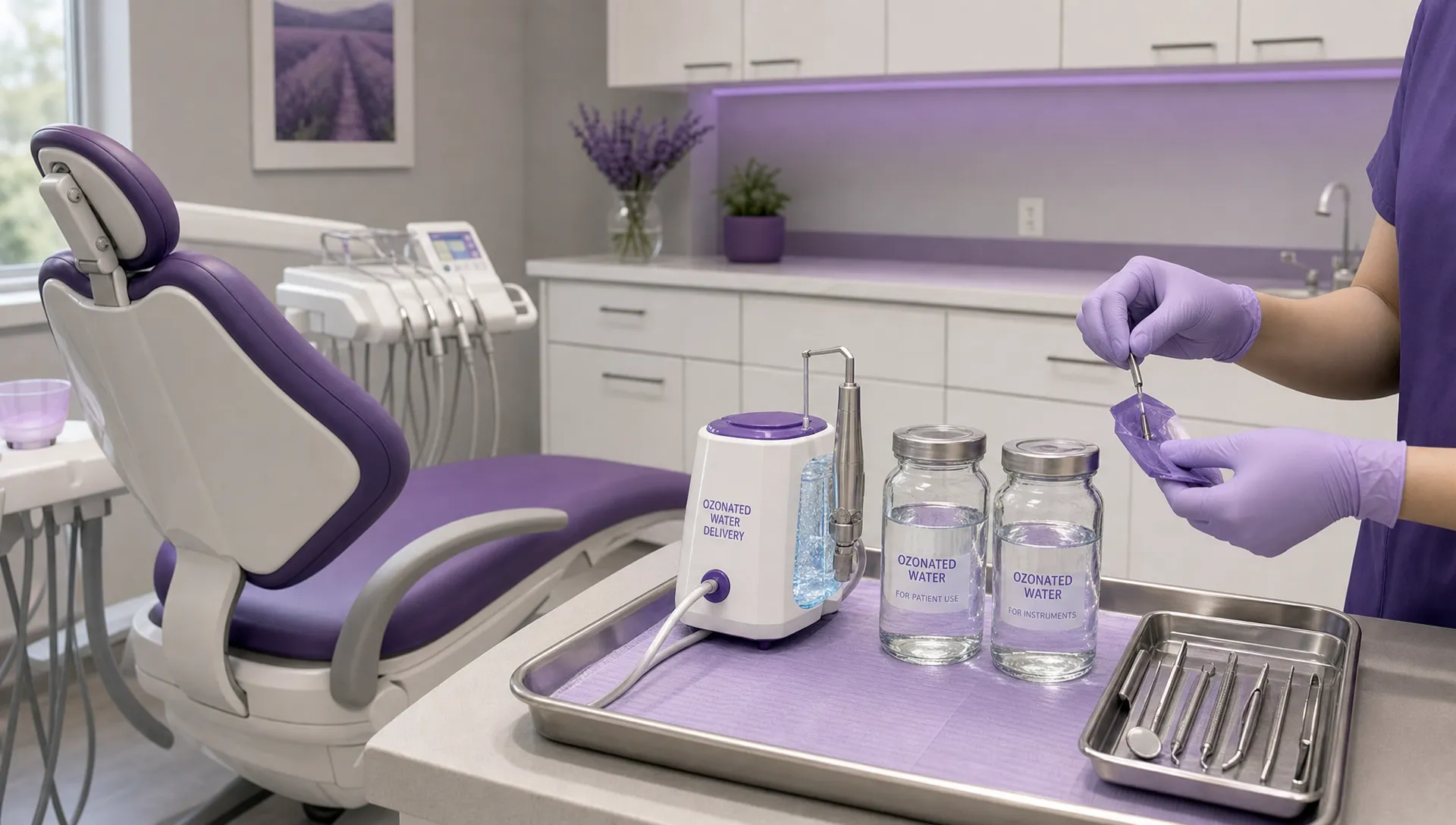
Ozone is a form of oxygen made of three oxygen atoms, often written as O3. In dental settings, ozone may be delivered in carefully controlled ways, such as ozonated water, ozone gas, or ozonated oils, depending on the area being treated and the purpose of care.
In biological dentistry, ozone is typically used because of its antimicrobial and oxidation-related properties. The goal is often to help reduce microbial burden in a localized area, support a cleaner field during treatment, and encourage an environment that is more compatible with healing. It is not a substitute for removing decay, cleaning infected tissue, evaluating bite forces, or understanding why a problem developed in the first place.
The research base is still evolving. PubMed-indexed literature on ozone therapy in dentistry includes studies and reviews across gum care, restorative dentistry, wound support, and microbial reduction, but results vary by condition, delivery method, and study design. A biological approach should acknowledge both the potential and the limits.
Why ozone fits the biological dental model
Biological dentistry asks a different question than conventional symptom-focused dentistry. Instead of only asking, “How do we repair this tooth?” it also asks, “What is contributing to this breakdown, what materials are safest for this person, and how can care be delivered with the lowest reasonable toxic burden?”
Dental ozone therapy may fit that model because it can be used as an adjunct in a low-toxicity treatment plan. For patients who are toxin-sensitive, concerned about mercury exposure, sensitive to fluoride, or navigating autoimmune and gut-related issues, even small clinical choices can matter. Ozone may offer a way to support microbial control without relying only on harsher chemical agents.
This does not mean ozone is right for every patient or every procedure. At Origin Dental Wellness, the decision belongs inside a larger assessment that may include salivary and biofilm diagnostics, cone beam CT imaging when indicated, biocompatibility considerations, and an oral-systemic review. You can learn more about that broader philosophy in our guide to how biological dental procedures support whole-body health.
When dental ozone therapy may support care
Ozone is best understood as supportive, not stand-alone. It may be considered when the goal is to improve the local biological environment while the underlying cause is being addressed.
Gum and biofilm-focused care
The mouth contains a complex microbial ecosystem. Some microbes are compatible with health, while others may contribute to gum inflammation, bleeding, bone loss, and chronic immune activation. The National Institute of Dental and Craniofacial Research explains that gum disease is linked to bacterial buildup and inflammation around the teeth.
In a biological practice, gum care is not only about scraping away buildup. It is also about understanding biofilm behavior, supporting a healthier microbiome, and reducing inflammatory burden. Ozonated water or other ozone applications may be used as part of periodontal care to help create a cleaner environment before, during, or after treatment.
For patients in Tulsa, Broken Arrow, Jenks, Bixby, Owasso, Sand Springs, and across Oklahoma, this can be especially relevant when gum issues overlap with systemic concerns. A patient with bleeding gums, digestive issues, blood sugar concerns, or immune challenges may need a more comprehensive plan than a routine cleaning alone.
Early decay and remineralization support
In some early-stage situations, the tooth surface may be weakened but not yet require aggressive intervention. A biological approach looks at saliva quality, mineral availability, oral pH, diet, airway, and microbial patterns before deciding how to proceed.
Ozone may be considered as part of a conservative strategy when Dr. Toler determines that the tooth structure, symptoms, and risk factors make that appropriate. It may be used to support microbial reduction in a targeted area while the patient works on the deeper factors that influence decay risk.
At Origin Dental Wellness, this does not mean routine fluoride is the default recommendation. Our approach is fluoride-free and focused on individualized prevention, mineral support, nutrition, and microbiome-aware care.
Restorative dentistry and biocompatible materials
When a tooth needs a filling, crown, or other restoration, the material placed in the body matters. Biological dentistry emphasizes biocompatibility, especially for patients who report chemical sensitivities, metal reactions, chronic inflammation, or immune dysregulation.
Ozone may be used during certain restorative procedures to support a cleaner tooth surface or preparation site. But it does not replace the need for careful decay removal, proper isolation, quality bonding, or thoughtful material selection. In some cases, patients may benefit from material compatibility evaluation or testing such as MELISA when metal hypersensitivity is a concern.
This is one reason ozone belongs in a protocol, not as a standalone product. The surrounding choices, including isolation, materials, moisture control, bite design, and follow-up, influence whether a restoration supports long-term oral health.
Surgical and extraction site support
Biological oral surgery focuses on minimizing trauma, supporting circulation, and helping the body heal as well as possible. Ozone may be used around extractions or surgical sites as one supportive element in a larger healing-centered protocol.
Depending on the case, Dr. Toler may also consider tools such as cone beam CT imaging, careful site cleaning, PRP or PRF, and nutritional support. These choices are individualized. Ozone is not a guarantee of faster healing, and it should never be presented that way. Instead, it may help support the quality of the local environment while the body does its own healing work.
How Dr. Toler decides whether ozone makes sense
Because ozone can be used in different ways, the most important question is not simply, “Do you offer ozone?” It is, “Why would ozone be appropriate for this patient, at this time, for this condition?”
At Origin Dental Wellness, Dr. Toler’s biological and nutrition-focused training helps guide that decision. The process may consider oral findings, medical history, sensitivity concerns, past dental work, current symptoms, imaging, biofilm patterns, and the patient’s overall health goals.
A thoughtful ozone decision may include questions such as:
- Is the concern primarily microbial, structural, inflammatory, or material-related?
- Is ozone being used to support a larger procedure or as part of prevention?
- Are there hidden issues that require imaging or deeper diagnostics?
- Does the patient have sensitivities that affect material or medicament choices?
- What follow-up is needed to confirm that the area is responding appropriately?
This is especially important for immune-compromised patients or patients with complex health histories. Dental ozone therapy should be coordinated with common sense, medical awareness, and individualized clinical judgment.
Where ozone may not be enough
Ozone has limits. It cannot rebuild lost bone, remove a cracked tooth, correct a failing bite, or make an unsafe dental material biocompatible for a sensitive patient. It also cannot replace surgical judgment when an infection, abscess, or failing tooth requires definitive care.
This matters because biological dentistry should not mean avoiding necessary treatment. It means choosing treatment that is compatible with the patient’s biology whenever possible.
One important example is root canal therapy. Origin Dental Wellness does not recommend root canals as our preferred approach. From our biological perspective, the concern is that a root-canaled tooth may remain a potential source of microbial or inflammatory burden for some patients. When a tooth is deeply compromised, ozone may be considered as part of a tooth-conserving or surgical plan, but it cannot make every tooth restorable. For a deeper look at this philosophy, read our article on holistic dentistry alternatives to root canals.
Dental ozone therapy in context
The value of ozone depends on context. The same tool can be used thoughtfully or superficially. A biological practice should be able to explain the reason for ozone, the way it fits into the plan, and what other diagnostics or therapies are needed.
| Clinical situation | How ozone may support care | What it should not replace |
|---|---|---|
| Gum inflammation or biofilm concerns | May support microbial reduction during hygiene or periodontal therapy | Thorough cleaning, diagnosis, home care, and follow-up |
| Early enamel weakening | May support a conservative, microbiome-aware prevention plan | Diet review, mineral support, saliva evaluation, and monitoring |
| Restorative treatment | May help create a cleaner localized treatment field | Careful decay removal, isolation, bonding, and biocompatible materials |
| Extraction or surgery | May support the local environment around healing tissue | Surgical judgment, site debridement, PRP or PRF when indicated, and aftercare |
| Root canal concerns | May be part of a biological alternative or extraction site protocol | A clear diagnosis and honest discussion of prognosis |
Questions to ask before choosing ozone therapy
Patients are often drawn to ozone because it sounds natural, high-tech, or less toxic. Those can be valid reasons to ask about it, but they are not enough on their own. The provider’s philosophy and protocol matter just as much as the tool.
Whether someone is choosing a biological office in Oklahoma or comparing family-centered dental practices elsewhere, such as a family-focused dental clinic in Geelong, the same principle applies: ask how the treatment is being used, what problem it is meant to address, and what evidence or clinical reasoning supports the recommendation.
Good questions include: What form of ozone will be used? Is it part of gum therapy, restorative care, surgical care, or prevention? What diagnostics are being used to identify the real issue? What are the alternatives? What should I expect afterward? How will we know whether the area is improving?
These questions help move the conversation away from “ozone as a trend” and toward ozone as one possible tool in a responsible treatment plan.
What to expect at Origin Dental Wellness
At Origin Dental Wellness in Tulsa, ozone is considered within a comprehensive biological model. That means our team does not view a tooth, filling, gum pocket, or infection in isolation. We consider the patient’s health history, sensitivities, nutritional status, oral microbiome, and potential oral-systemic connections.
For patients concerned about mercury, metal allergies, fluoride exposure, or chronic inflammation, this broader view can be especially important. If mercury amalgam removal is part of the conversation, ozone is not a replacement for protective removal protocols. Separate safety measures and biological planning are needed to reduce exposure and support the patient during care.
If ozone or any other treatment is recommended, fees are discussed once a treatment plan is created. Origin Dental Wellness is out-of-network for all insurance providers, and treatment is provided based on clinical judgment rather than the likelihood of insurance coverage.
For patients who want more background before scheduling, our article on health through ozone therapy offers a broader introduction to how ozone is discussed in our practice.
Frequently Asked Questions
Is dental ozone therapy safe? Ozone should only be used in a controlled clinical setting with appropriate training, delivery methods, and patient selection. It is not something patients should attempt to use on their own for dental problems.
Can ozone replace antibiotics or dental treatment? No. Ozone may support microbial control in some settings, but it does not replace diagnosis, necessary dental procedures, medical care, or antibiotics when those are clinically indicated.
Is ozone therapy right for every cavity? No. Some teeth need restoration, some need monitoring and prevention, and some are too structurally compromised to save. Dr. Toler evaluates the tooth and the patient’s overall risk factors before recommending a plan.
Does Origin Dental Wellness use fluoride with ozone? Origin Dental Wellness follows a fluoride-free approach. When prevention or remineralization support is needed, Dr. Toler considers other biological strategies based on the patient’s needs.
Can ozone help if I am sensitive to dental materials? Ozone may be one supportive tool, but it does not solve material sensitivity by itself. Biocompatible material selection, hypersensitivity considerations, and a low-toxicity treatment plan are still essential.
Considering dental ozone therapy in Tulsa?
If you are in Tulsa, the surrounding metro, elsewhere in Oklahoma, or traveling from a neighboring state, Origin Dental Wellness can help you understand whether dental ozone therapy belongs in your biological care plan.
The goal is not to use ozone for everything. The goal is to make careful, health-centered decisions that respect your mouth, your microbiome, your sensitivities, and your whole body.
To explore whether ozone-supported biological dentistry is appropriate for you, contact Origin Dental Wellness and schedule a comprehensive new patient visit with Dr. Toler and our team.