
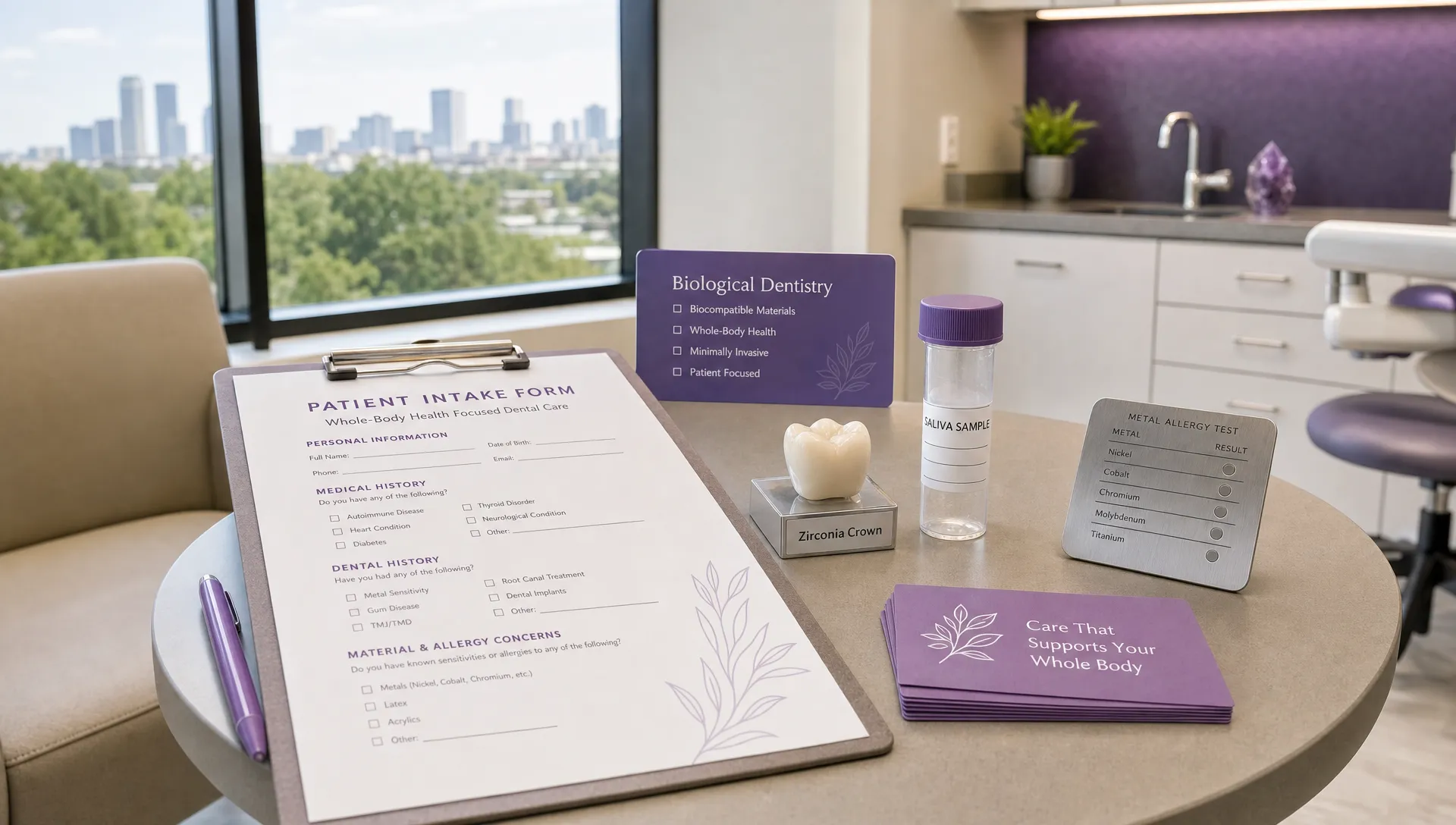
Choosing a dental office is not only about finding a convenient appointment time or a clean waiting room. For toxin-sensitive patients, families pursuing low-toxicity living, and adults with complex immune or systemic concerns, the better question is this: will this dental office understand how dental materials, inflammation, oral bacteria, and treatment choices may affect the rest of the body?
That question matters in Tulsa and across Oklahoma, where more patients are seeking care that aligns with their broader wellness values. At Origin Dental Wellness, a single-dentist biological practice led by Shannon Toler, DDS, BCHN, AIAOMT, FAAOSH, FMRII, the focus is not simply on fixing teeth. It is on helping patients make informed, biocompatible decisions that support oral and whole-body health.
If you are comparing dental offices, this guide will help you know what to look for, what to ask, and what red flags may indicate that a practice is not truly operating from a biological perspective.
What Biocompatible Dental Care Really Means
Biocompatible care starts with a simple principle: the materials and methods used in the mouth should be selected with the whole person in mind. Teeth do not exist separately from the immune system, bloodstream, microbiome, nervous system, or inflammatory pathways.
In a biological dental office, treatment planning often considers questions such as:
- Could this material trigger sensitivity in this patient?
- Is there a lower-toxicity option that still meets the clinical need?
- What does the patient’s gum health, biofilm, and oral microbiome suggest?
- Could hidden infection, chronic inflammation, or airway dysfunction be contributing to symptoms?
- How can we reduce unnecessary exposures during treatment?
This is different from simply choosing tooth-colored fillings or advertising a spa-like environment. A truly biocompatible dental office should be able to explain why it uses certain materials, how it evaluates risk, and how it adapts care for patients with sensitivities, autoimmune concerns, gut issues, or a history of poor reactions to dental work.
Start With the Dental Office Philosophy
Before you evaluate technology or services, listen to how the practice talks about health. A biological dental office should view dentistry as part of a larger health picture, not as an isolated mechanical repair system.
For example, if you ask why your gums bleed, the answer should go beyond brushing technique. A whole-body conversation may include biofilm, inflammation, nutrition, blood sugar regulation, mouth breathing, medications, sleep, stress, immune function, and the oral microbiome.
Organizations such as the American Academy for Oral & Systemic Health emphasize the connection between oral health and systemic health. That does not mean a dental office should diagnose medical conditions outside its scope. It does mean the office should recognize that oral inflammation and systemic wellness often influence one another.
If a dental office presents every patient with the same default treatment plan, the care may not be very biocompatible. If it asks about your health history, allergies, sensitivities, nutrition, immune status, medications, sleep, and prior dental reactions, you are more likely to be in the right environment.
Look for Material Awareness, Not Just Cosmetic Materials
Many patients assume that metal-free or tooth-colored dentistry automatically means biocompatible dentistry. That is not always true. Composite resins, ceramics, bonding agents, cements, anesthetics, implant materials, and temporary materials all vary in composition.
A biocompatible dental office should be able to explain how it selects materials and what options exist for patients with chemical sensitivities or metal allergies. For patients with known or suspected hypersensitivity, Dr. Toler may discuss compatibility considerations and, when appropriate, testing options such as MELISA testing to help guide material decisions.
This is especially important for patients considering implants, crowns, bridges, or larger restorative plans. If implants are part of the conversation, it is worth learning why many health-conscious patients ask about biocompatible dental implants before committing to a treatment plan.
Here is a simple comparison to use when interviewing a dental office:
| Topic to ask about | Generic answer | Biocompatible answer |
|---|---|---|
| Fillings | We use tooth-colored fillings | We consider material composition, sensitivity history, and long-term compatibility |
| Implants | We place standard implants | We evaluate materials, bone health, inflammation, imaging, and patient-specific risk factors |
| Crowns | We use strong crowns | We discuss ceramic options, cement selection, bite forces, and gum response |
| Sensitive patients | Most people tolerate our materials | We review allergies, prior reactions, immune concerns, and testing options when appropriate |
The goal is not to find a dental office that claims one material is perfect for everyone. The goal is to find one that understands individual compatibility.
Ask How the Office Handles Mercury Amalgam Removal
For patients concerned about mercury exposure, amalgam removal is one of the clearest ways to evaluate whether a dental office is truly biological. Removing old silver fillings without additional safeguards can create unnecessary vapor and particle exposure.
Origin Dental Wellness follows a biological approach to mercury filling removal. Dr. Toler uses safety-minded protocols consistent with the practice’s low-toxicity philosophy. Patients who are evaluating offices should specifically ask whether the office is familiar with the IAOMT Safe Mercury Amalgam Removal Technique, commonly known as SMART.
A mercury-aware dental office should be able to discuss protections such as isolation, high-volume suction, filtration, clean air considerations, and careful removal technique. It should also be willing to talk about timing, patient readiness, and whether removal is appropriate based on your exam and overall health context.
The key is not fear-based dentistry. The key is respect for patient concerns, informed consent, and thoughtful exposure reduction.
Evaluate the Diagnostic Process Before Treatment Is Recommended
Biocompatible care depends on better information. A quick exam may be enough for a simple screening, but it is rarely enough for a patient who wants whole-body-aware dentistry.
A strong biological dental office may use advanced diagnostics such as cone beam CT when clinically appropriate, salivary and biofilm testing, periodontal evaluation, airway screening, digital imaging, and detailed health history review. These tools can help the provider understand what is happening beneath the surface before recommending treatment.
The National Institute of Dental and Craniofacial Research describes gum disease as an infection of the tissues that support the teeth. From a biological perspective, that matters because chronic oral infection and inflammation deserve more than a quick cleaning and a reminder to floss.
If you want to understand this distinction more deeply, Origin Dental Wellness explains how general dentistry changes in a biological practice when the focus shifts from routine repair to whole-person assessment.
Choose a Dental Office That Understands the Oral Microbiome
The mouth is home to a complex microbial ecosystem. A healthy dental office should not treat all bacteria as the enemy. Instead, it should focus on biofilm balance, gum stability, oxygenation, immune response, and the conditions that allow harmful bacteria to overgrow.
In a biological practice, preventive care may include a deeper look at why plaque, bleeding, inflammation, or decay keeps returning. This may include conversations about diet, mineral balance, dry mouth, pH, nasal breathing, sleep quality, and systemic inflammation.
At Origin Dental Wellness, our approach is fluoride-free. That means the focus is on identifying root causes, supporting remineralization through a broader wellness lens, and choosing prevention strategies that align with the patient’s values and risk profile. This does not mean every patient receives the same recommendations. It means the conversation is individualized.
Patients with immune compromise, gut health concerns, autoimmune histories, or recurring gum problems should ask whether the dental office offers microbiome-aware assessment rather than only routine polishing and scraping.
Ask About Root Canal Philosophy Before You Are in Pain
Root canal treatment is one of the most important philosophical differences between conventional dentistry and many biological practices. If you wait until you have severe pain, swelling, or an urgent dental need, you may feel pressured to make a fast decision.
Origin Dental Wellness chooses not to provide root canal therapy. This reflects our biological approach to non-vital teeth, chronic infection concerns, and patient-specific risk assessment. Dr. Toler discusses alternatives, imaging findings, and appropriate next steps based on each patient’s condition.
When interviewing a dental office, ask how it evaluates infected, cracked, or non-vital teeth. A biological answer should include imaging, symptoms, immune history, long-term risks and benefits, and clear informed consent. It should not dismiss your concerns or pressure you into a one-size-fits-all solution.
Consider Healing Support, Not Just the Procedure
The procedure itself is only one part of dental care. A biocompatible dental office should also consider how the body may heal afterward.
Depending on the case, a biological practice may discuss supportive tools such as ozone therapy, PRP or PRF, careful surgical technique, nutritional status, and ways to reduce inflammatory burden. These therapies are not magic guarantees, and no dental office should promise a specific outcome. They are tools that may be considered as part of a broader strategy.
This is also where collaboration with other health professionals can matter. Patients managing metabolic health, hormones, weight, sleep, inflammation, or chronic illness may benefit from coordinated support outside the dental office. For example, some patients seek medically supervised wellness programs, such as personalized coaching and medical monitoring for weight-related health goals, as part of a larger effort to improve systemic resilience.
The point is not that dental care replaces medical care. The point is that biological dentistry respects the fact that oral healing occurs inside a whole body.
Make Sure the Office Is Prepared for Sensitive Patients
Many patients seeking biocompatible care have already learned that they react strongly to medications, scents, metals, chemicals, or stress. Others have dental anxiety, sensory sensitivities, trauma histories, or difficulty tolerating long procedures.
A biological dental office should be willing to slow down, listen carefully, and adapt where possible. This may include reviewing prior reactions, discussing anesthetic options, minimizing unnecessary exposures, creating a calmer appointment flow, or using relaxation support such as NuCalm when appropriate.
If you are chemically sensitive, ask practical questions before scheduling:
- Does the office take fragrance or chemical sensitivity seriously?
- Can I discuss material concerns before treatment begins?
- How does the team handle patients with anxiety or sensory overwhelm?
- Will I receive a clear explanation before anything is placed in my mouth?
- Can treatment be phased if my body does better with shorter visits?
The way the team responds to these questions tells you a lot. You are looking for respect, clarity, and a willingness to individualize care.
Review Transparency Around Fees, Insurance, and Time
A comprehensive biological dental office may not operate like a volume-based clinic. The first appointment may be longer, more detailed, and more educational than what many patients have experienced elsewhere. That can affect cost and scheduling.
At Origin Dental Wellness in Tulsa, the new patient appointment is over $500 and is designed to provide extensive insight and customized recommendations for overall dental health. Specific pricing is available upon request once a treatment is recommended. Payment is due in full on the day of the appointment. Our team files with insurance afterward, and reimbursement is based on the patient’s out-of-network benefits and the insurance company’s approval. Origin Dental Wellness is out-of-network for all insurance providers.
We do not directly offer financing or in-house pay-over-time plans, but we do accept the CareCredit credit card. CareCredit is a third-party option, and patients should review its terms directly.
This financial model may not be right for everyone, which is why transparency matters. When choosing a dental office, ask what is included in the initial visit, how treatment recommendations are presented, and whether care is guided by clinical judgment rather than insurance coverage.
A Practical Checklist for Choosing a Biocompatible Dental Office
Use this checklist as you compare options in Tulsa, Broken Arrow, Jenks, Bixby, Owasso, Sand Springs, Oklahoma City, or beyond.
| What to evaluate | What to look for |
|---|---|
| Philosophy | Whole-body, oral-systemic, low-toxicity approach |
| Materials | Discussion of compatibility, sensitivity, ceramics, metals, cements, and testing options |
| Mercury removal | SMART-aware protocols and exposure reduction steps |
| Prevention | Microbiome-aware care, gum health assessment, and fluoride-free options if that aligns with your values |
| Diagnostics | Health history, periodontal evaluation, imaging, salivary or biofilm testing when appropriate |
| Root canal policy | Clear explanation of the office’s philosophy and alternatives |
| Healing support | Consideration of ozone, PRP or PRF, nutrition, inflammation, and recovery factors |
| Communication | Informed consent, unhurried explanations, and respect for sensitive patients |
| Financial clarity | Clear expectations about fees, insurance, and payment structure |
You do not need to become a dental expert before making an appointment. You simply need to choose a dental office that welcomes informed questions and can explain its reasoning clearly.
Red Flags to Watch For
Not every office using the words holistic, natural, or biological practices the same way. Marketing language can be vague, so pay attention to what happens when you ask detailed questions.
Be cautious if a dental office dismisses material sensitivities, cannot explain how it removes amalgam safely, recommends the same materials for every patient, or treats gum inflammation as only a hygiene problem. Another red flag is pressure. Biocompatible care should include education and informed consent, not fear-based urgency.
It is also worth being cautious of any office that promises guaranteed outcomes or claims dental treatment will cure systemic disease. A responsible biological practice can discuss connections, risks, and supportive strategies without overstepping into medical guarantees.
For a broader look at how this type of care fits into long-term wellness, you can read more about how biological dental procedures support whole-body health.
Frequently Asked Questions
What makes a dental office biocompatible? A biocompatible dental office considers how dental materials, oral bacteria, inflammation, and procedures may affect the whole person. It should evaluate material sensitivity, health history, gum health, and patient-specific risk before recommending care.
Is metal-free dentistry the same as biological dentistry? Not necessarily. Metal-free dentistry can be part of a biological approach, but biocompatible care also considers material chemistry, immune response, oral-systemic health, diagnostics, and low-toxicity protocols.
Should I ask about mercury removal before scheduling? Yes, especially if you have amalgam fillings or are concerned about mercury exposure. Ask whether the office uses SMART-informed precautions and how it reduces vapor and particle exposure during removal.
Does a biological dental office use fluoride? Practices vary. Origin Dental Wellness uses a fluoride-free approach and focuses on individualized prevention, oral microbiome balance, mineral support, and whole-body risk factors.
Why does a biological dentist ask about medical history and nutrition? Oral health is influenced by immune function, inflammation, blood sugar regulation, nutrition, medications, sleep, and other systemic factors. Dr. Toler is also a Board Certified Holistic Nutritionist, so these connections are part of the practice’s whole-person approach.
Is biological dentistry only for people with health problems? No. Many patients choose biocompatible care because they want prevention, safer material choices, low-toxicity dentistry, and more education before dental problems become complex.
Ready to Choose a Dental Office in Tulsa With a Biological Approach?
If you are looking for a dental office that takes biocompatibility, oral-systemic health, material selection, and low-toxicity care seriously, Origin Dental Wellness welcomes patients from Tulsa, the surrounding metro, Oklahoma City, and neighboring states.
Led by Shannon Toler, DDS, BCHN, AIAOMT, FAAOSH, FMRII, our biological dental practice is designed for patients who want more than routine dentistry. We take time to understand your health history, concerns, sensitivities, and goals so recommendations can be customized to you.
To learn whether Origin Dental Wellness is the right fit for your needs, contact our Tulsa team and request a new patient appointment.