
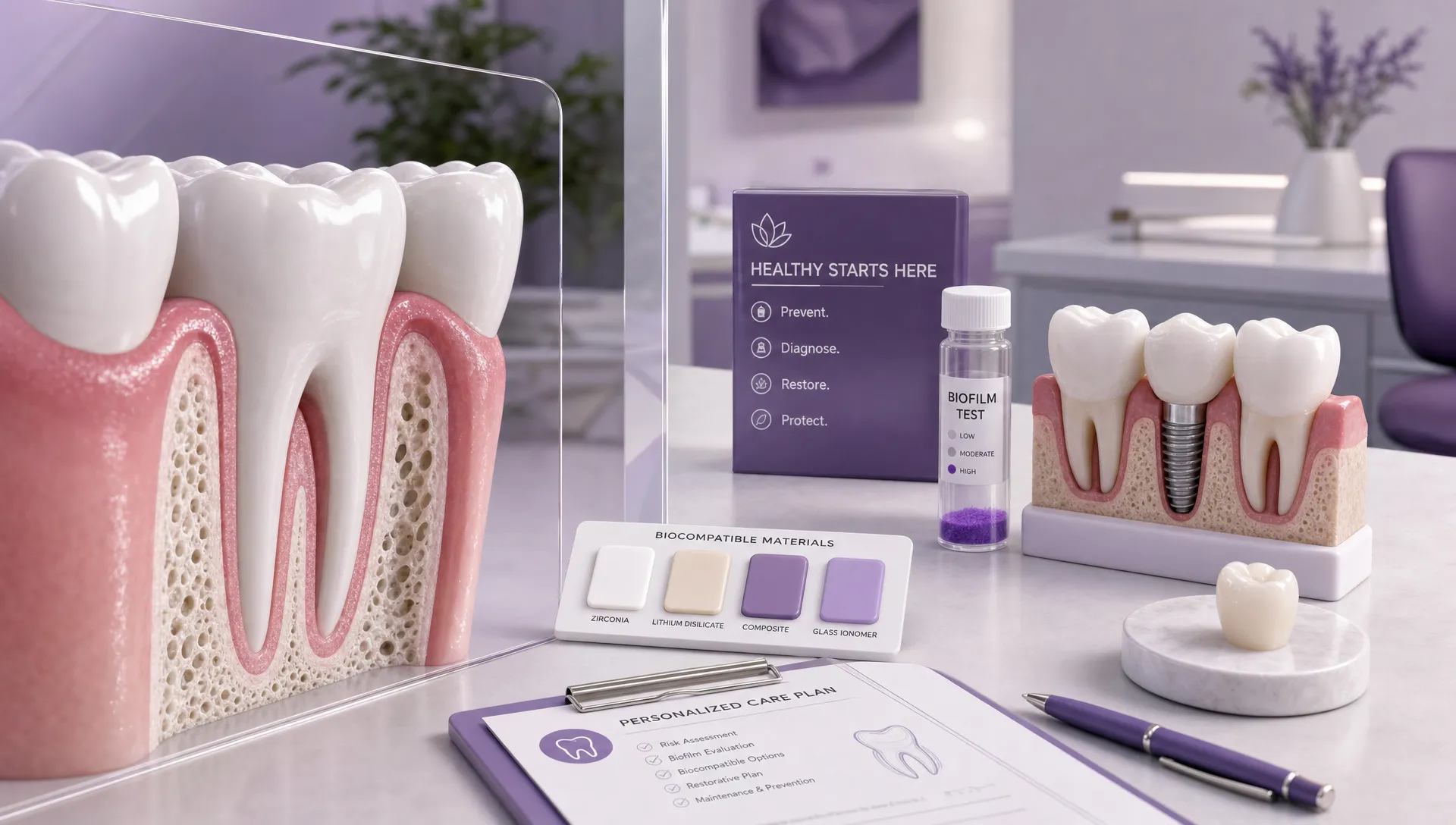
If you are looking for general dentistry in Tulsa, you probably want the basics done well: clean teeth, healthy gums, strong restorations, clear answers, and a plan that helps you avoid bigger problems later. In a biological dental practice, those goals remain, but the way they are pursued changes significantly.
At Origin Dental Wellness in Tulsa, Oklahoma, general dentistry is not treated as a collection of isolated tooth services. It is viewed through a whole-body lens, with attention to biocompatibility, inflammation, the oral microbiome, material sensitivity, and the connection between the mouth and systemic health. That difference matters for patients who are toxin-sensitive, immune-compromised, concerned about mercury or fluoride, or simply trying to make health-conscious choices.
General dentistry is the same category, not the same philosophy
In a typical dental office, general dentistry often includes exams, cleanings, X-rays, fillings, gum disease care, extractions, and ongoing preventive visits. This overview of general dentistry services is a helpful example of the familiar category most patients recognize.
A biological practice still addresses cavities, gum inflammation, cracked teeth, dental infections, and prevention. The difference is that each decision is filtered through additional questions:
- What is happening in the mouth, and how might it affect the rest of the body?
- Which materials are most compatible with this patient?
- Can we reduce toxic burden while still treating the dental problem effectively?
- Is the oral microbiome being supported or disrupted?
- Are we addressing the conditions that allowed the problem to develop?
That shift changes the conversation from fixing teeth to supporting long-term oral and systemic wellness.
1. The exam starts with oral-systemic context
In a biological practice, an exam is not only about finding cavities. It is also about understanding the terrain around the teeth: gum health, inflammation, existing restorations, prior dental work, airway and bite concerns when relevant, diet patterns, sensitivities, and the patient’s broader health history.
Shannon Toler, DDS, BCHN, AIAOMT, FAAOSH, FMRII, is a Biological Dentist and Board Certified Holistic Nutritionist. When she evaluates a patient, clinical judgment includes both dental findings and the bigger health picture, especially for people with chronic inflammation, autoimmune concerns, gut issues, or chemical sensitivities.
This oral-systemic perspective is not fringe thinking. The National Institute of Dental and Craniofacial Research describes gum disease as an infection and inflammation of the tissues that support the teeth, and organizations such as the American Academy for Oral & Systemic Health focus specifically on the relationship between oral health and whole-body health.
For patients in Tulsa, Broken Arrow, Jenks, Bixby, Owasso, Sand Springs, and beyond, this often means the first visit feels more comprehensive than a traditional quick checkup. Instead of asking only what tooth hurts, the biological approach asks why the mouth is expressing imbalance and what can be done to reduce future risk. You can explore this philosophy further in Origin’s article on the link between oral health and chronic disease.
2. Cleanings become biofilm and microbiome appointments
A conventional cleaning is often described as removing plaque and tartar. In a biological practice, that is still important, but the deeper focus is the oral biofilm.
Biofilm is the organized community of microorganisms that lives on teeth, gums, the tongue, and dental restorations. The goal is not to create a sterile mouth. A healthy mouth has microbes. The goal is to shift the environment away from destructive patterns that contribute to decay, gum inflammation, bleeding, bad breath, and bone loss.
That changes how prevention is discussed. Hygiene visits may include education about brushing technique, interdental cleaning, gum pocket changes, pH, dry mouth, diet patterns, and the factors that encourage harmful biofilm to return quickly. When appropriate, Dr. Toler may also consider salivary or biofilm diagnostics to better understand what is happening rather than guessing from appearance alone.
This is especially relevant for immune-compromised patients or people with gut and inflammatory concerns. The mouth is the beginning of the digestive tract, and biological dentistry treats that relationship with respect.
3. Diagnostics aim to reduce guesswork
Biological general dentistry often uses advanced diagnostics not because every patient needs every test, but because better information can lead to more personalized treatment planning.
At Origin Dental Wellness, tools and approaches may include cone beam CT, salivary and biofilm diagnostics, and evaluation for material hypersensitivity when appropriate. Cone beam CT can provide three-dimensional information that may be helpful in selected situations, such as evaluating complex anatomy, previous dental work, bone changes, or areas of concern that are not fully understood from a standard clinical exam.
The key is clinical appropriateness. A biological practice should not order tests simply because technology exists. The question is whether the information will change the diagnosis, improve safety, guide treatment, or help the patient understand their options. Origin discusses this philosophy in more detail in its article on how advanced care dental improves diagnosis and healing.
4. Material choice becomes part of the treatment plan
In many general dentistry settings, a filling is chosen primarily for strength, appearance, cost, or convenience. In a biological practice, those factors still matter, but material compatibility becomes central.
Not every patient responds to dental materials in the same way. For toxin-sensitive patients, people with metal allergies, or patients with a history of unexplained reactions, biocompatibility is not a minor detail. It can shape the entire treatment plan.
This is where options such as hypersensitivity testing and MELISA testing may enter the conversation. The purpose is not to label one material as best for everyone. The purpose is to help identify materials that are more appropriate for the individual patient.
A biological material conversation often includes questions like these:
- Does this material align with the patient’s sensitivity history?
- Is there a lower-toxicity option that can still meet the clinical need?
- Can the tooth be restored conservatively?
- Will the material support long-term maintenance and gum health?
For patients who have had reactions to jewelry, implants, dental metals, fragrances, medications, or other environmental exposures, this part of general dentistry can be a major difference.
5. Prevention is fluoride-free and nutrition-aware
A biological practice may take a different approach to cavity prevention than a conventional office. At Origin Dental Wellness, the approach is fluoride-free, with emphasis on oral hygiene, nutrition, saliva quality, mineral balance, pH, biofilm control, and identifying the underlying reasons decay is developing.
This does not mean prevention becomes less serious. It means prevention becomes more individualized. A patient with dry mouth, frequent snacking, acidic beverages, mouth breathing, gum inflammation, or high bacterial activity may need a very different prevention plan than someone whose risk is low.
Because Dr. Toler is also a Board Certified Holistic Nutritionist, nutrition can be discussed as part of the dental picture when clinically relevant. This is not about giving one-size-fits-all dietary rules or supplement instructions. It is about recognizing that teeth and gums exist in a living system that depends on adequate nutrients, healthy saliva, balanced immune response, and daily habits.
6. Mercury removal changes from replacement to protocol
In conventional general dentistry, an old amalgam filling may be replaced when it breaks, leaks, or no longer supports the tooth properly. In a biological practice, the fact that amalgam contains mercury changes how removal is approached.
At Origin Dental Wellness, Dr. Toler follows the SMART protocol for mercury amalgam removal when mercury-containing fillings are being removed. SMART stands for Safe Mercury Amalgam Removal Technique, a protocol developed by the International Academy of Oral Medicine and Toxicology. The purpose is to reduce mercury exposure during the removal process through specific safety measures.
This is one of the clearest examples of how general dentistry changes in a biological setting. The treatment may look simple from the outside, removing an old filling and restoring the tooth, but the protocol, protective steps, and rationale are different.
For toxin-sensitive patients, this distinction can be one of the main reasons they seek a biological dentist in Oklahoma rather than a conventional dental office.
7. Root canal conversations are different
Another major difference involves infected or severely damaged teeth. Many conventional dental settings view root canal therapy as a standard option for saving a tooth. At Origin Dental Wellness, our approach is to avoid root canals because of the practice’s biological perspective on chronic infection risk, immune burden, and long-term whole-body considerations.
This does not mean every painful tooth has the same answer. It means Dr. Toler evaluates the tooth, the surrounding bone, the patient’s health history, and the patient’s values before discussing options. The goal is to make an informed decision, not to rush into a default procedure.
If you want a deeper explanation of this clinical philosophy, Origin has a full article on why biological dentists recommend avoiding root canals.
8. Surgical care includes healing biology
General dentistry sometimes includes extractions or coordination around more advanced procedures. In a biological practice, surgical care is not viewed as simply removing a tooth or completing a procedure. It also involves supporting the body’s healing response as appropriately as possible.
Depending on the case, Dr. Toler may consider tools such as ozone therapy or PRP/PRF as part of a biologically oriented treatment plan. These are not magic add-ons, and they do not guarantee a specific outcome. They are part of a broader philosophy that asks how to reduce microbial burden, support tissue healing, and respect the patient’s biology.
This same thinking applies to dental implants and restorative planning. Material selection, bone health, gum health, immune status, and maintenance all matter. A missing tooth is not just a space to fill. It is a decision point that affects chewing, bite forces, airway patterns in some cases, hygiene access, and systemic inflammation risk.
9. Comfort includes the nervous system
Biological dentistry is often chosen by patients who have had difficult dental experiences, chemical sensitivity, medical trauma, or anxiety about treatment. For these patients, comfort is not just a luxury. It can affect whether they seek care early or delay until a problem becomes urgent.
Origin Dental Wellness may use NuCalm as part of patient comfort support. The purpose is to help create a calmer experience without presenting relaxation as a guaranteed result for every person. A biological practice recognizes that the nervous system, stress response, and dental care experience are connected.
The tone of care matters too. Patients should understand what is being recommended, why it is being recommended, what alternatives exist, and how the plan aligns with their health priorities.
Biological vs conventional general dentistry: what changes?
| Area of care | Conventional general dentistry often focuses on | Biological general dentistry adds |
|---|---|---|
| Exams | Teeth, gums, decay, and symptoms | Oral-systemic context, inflammation, past dental materials, and whole-body history |
| Cleanings | Plaque and tartar removal | Biofilm balance, microbiome awareness, gum inflammation patterns, and prevention coaching |
| X-rays and imaging | Detecting cavities or visible pathology | Clinically appropriate diagnostics such as cone beam CT when deeper evaluation is needed |
| Fillings | Strength, function, and appearance | Biocompatibility, material sensitivity, conservative design, and low-toxicity planning |
| Gum care | Managing periodontal disease | Understanding microbial burden, inflammation, and systemic health connections |
| Fluoride | Routine fluoride may be recommended | Origin uses a fluoride-free prevention model |
| Mercury fillings | Replacement when damaged or desired | SMART-protocol removal when mercury amalgam is removed |
| Root canals | Often considered a tooth-saving standard | Origin’s approach is to avoid root canals and discuss biological alternatives |
The point is not that every conventional dental decision is careless. Many patients receive helpful care in traditional settings. The difference is that a biological practice uses a different decision-making framework, especially for patients who care deeply about materials, toxicity, chronic inflammation, and whole-body wellness.
Who benefits from biological general dentistry?
Biological general dentistry can be especially meaningful for adults and families who want preventive care that aligns with a low-toxicity lifestyle. It may also appeal to patients who have felt dismissed when asking about dental materials, mercury fillings, fluoride, gum inflammation, or the relationship between dental infections and systemic health.
Patients often seek this approach when they are concerned about metal allergies, chemical sensitivity, immune challenges, gut health, chronic inflammation, or unexplained symptoms that make them more cautious about dental treatment. Others simply want a more comprehensive explanation before agreeing to treatment.
Origin Dental Wellness serves patients throughout the Tulsa metro, including Broken Arrow, Jenks, Bixby, Owasso, and Sand Springs. Some patients also travel from Oklahoma City and neighboring states because they are specifically looking for a biological dental practice led by a dentist trained in both dentistry and holistic nutrition.
What to expect financially and logistically
Because biological general dentistry is more comprehensive, the first appointment at Origin Dental Wellness is different from a brief insurance-driven visit. The new patient appointment is over $500 and is likely more comprehensive than most initial dental visits patients have experienced. It is designed to provide extensive insight and customized recommendations for overall dental health.
Pricing for future treatment is available upon request once a treatment is recommended. Payment is due in full on the day of the appointment. Origin Dental Wellness is out-of-network for all insurance providers, and our team files with your insurance company so they can reimburse you at the out-of-network rate, subject to their approval.
The practice does not directly offer financing or pay-over-time plans, but it does accept the CareCredit credit card. CareCredit is a third-party service, and any benefits or terms are determined by CareCredit, not by Origin Dental Wellness.
Most importantly, treatment recommendations are based on what Dr. Toler believes is appropriate for the patient’s health, not on the likelihood that insurance will cover a procedure.
Frequently Asked Questions
Does biological general dentistry replace regular dental checkups? No. It still includes ongoing exams, cleanings, prevention, and treatment planning. The difference is that these services are approached through a whole-body, biocompatible, low-toxicity lens.
Is biological dentistry only for people with mercury fillings? No. Mercury-safe care is one part of biological dentistry, but patients also choose this approach for fluoride-free prevention, material sensitivity, gum health, oral-systemic concerns, microbiome awareness, and more personalized treatment planning.
Does Origin Dental Wellness use fluoride? Origin Dental Wellness follows a fluoride-free approach. Prevention is centered on oral hygiene, nutrition, saliva quality, biofilm control, pH, and identifying the reasons decay risk is present.
Why does Origin Dental Wellness avoid root canals? Our approach is to avoid root canals because of biological concerns about chronic infection risk and whole-body immune burden. Dr. Toler evaluates each situation individually and discusses options based on the patient’s clinical findings and health priorities.
Is the first visit different from a standard dental appointment? Yes. The new patient appointment is more comprehensive than a typical quick exam and is over $500. It is designed to give patients deeper insight into their oral health and a customized plan rather than a rushed treatment list.
Ready for general dentistry with a biological perspective?
If you want general dentistry in Tulsa that considers your teeth, gums, materials, microbiome, and whole-body health together, Origin Dental Wellness offers a different kind of dental experience. This is a single-dentist biological practice led by Dr. Shannon Toler, with a team focused on health-centered, low-toxicity care.
Whether you live in Tulsa, the surrounding metro, elsewhere in Oklahoma, or are traveling from a neighboring state, our team can help you understand what is happening in your mouth and what options align with your health priorities. Reach out to Origin Dental Wellness to learn whether a biological approach to general dentistry is the right fit for your next step.