
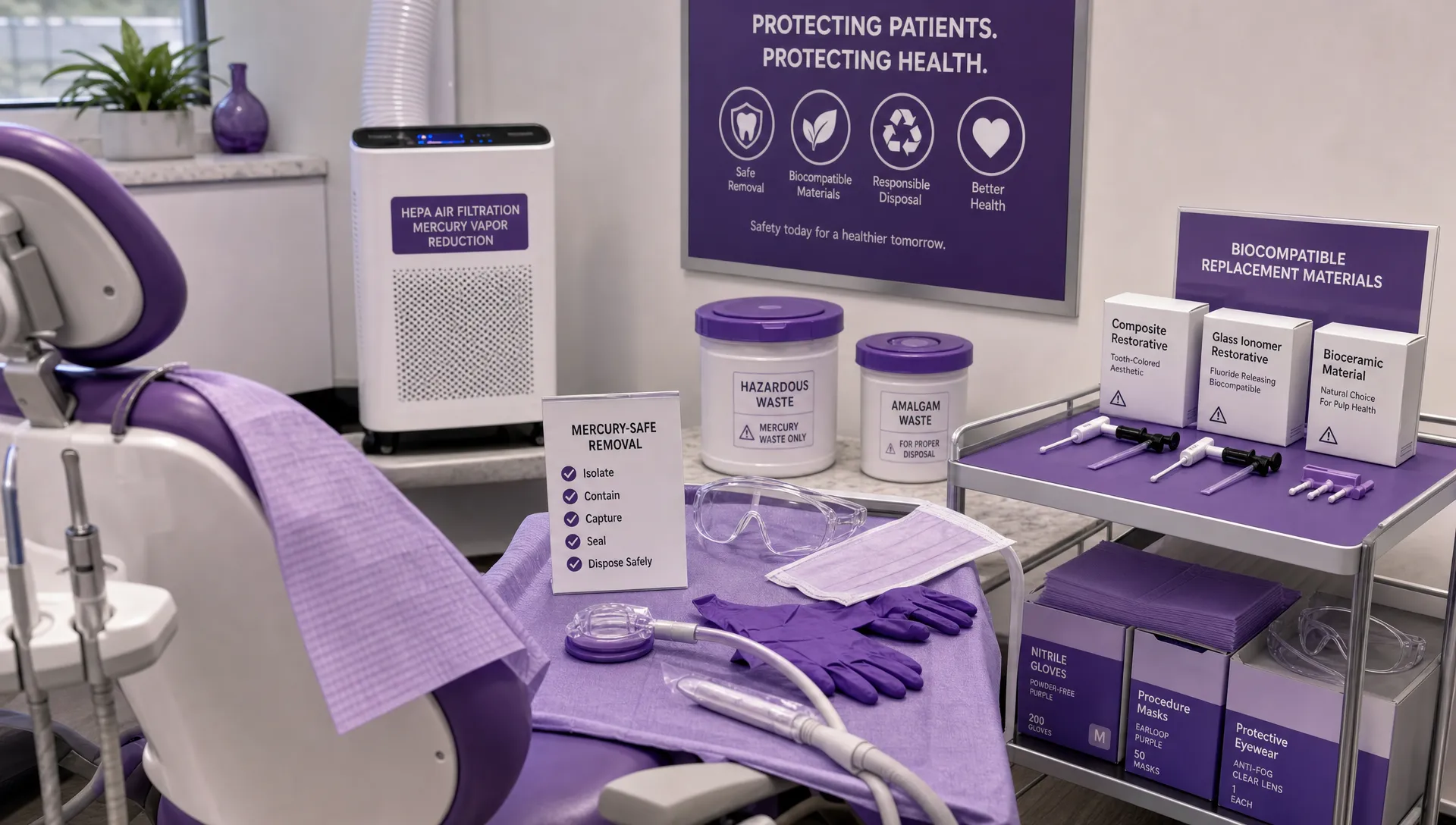
If you have old “silver” fillings and you are considering mercury filling removal in Tulsa or elsewhere in Oklahoma, the most important thing to know is this: removal is not just a cosmetic or routine dental decision. From a biological dental perspective, it is a planning decision that should account for mercury vapor exposure, your immune and detoxification capacity, the condition of each tooth, and the materials that will replace the filling.
At Origin Dental Wellness, Dr. Shannon Toler, DDS, BCHN, AIAOMT, FAAOSH, FMRII approaches amalgam replacement through a biological lens. That means the goal is not simply to remove a metal filling. The goal is to reduce avoidable exposure during the process, preserve as much healthy tooth structure as possible, and choose restorative materials that make sense for your body.
This guide explains what to ask, what to prepare, and what to understand before scheduling mercury filling removal, especially if you are toxin-sensitive, immune-compromised, concerned about metal allergies, or simply trying to make more informed choices for your long-term health.
First, what are “silver” fillings?
“Silver fillings” are usually dental amalgam fillings. They are called silver because of their appearance, but they are not simply silver. The National Institute of Dental and Craniofacial Research describes dental amalgam as a mixture of metals that includes elemental mercury combined with a powdered alloy.
In conventional dentistry, amalgam has been used for many years because it is durable and can tolerate chewing forces. In biological dentistry, the conversation is different. Our approach is to avoid placing mercury-containing restorations and to use specific precautions when they are removed or replaced.
This does not mean every person should rush to have every filling removed at once. It does mean the decision deserves more thought than “drill it out and put something tooth-colored in its place.” A careful plan can help reduce unnecessary exposure and avoid trading one problem for another.
Why mercury filling removal should not be casual
Mercury filling removal can release mercury vapor and fine particles if the filling is drilled without appropriate precautions. That is why biological and mercury-safe dentistry focuses so heavily on the removal environment, the equipment used, and the sequence of care.
The International Academy of Oral Medicine and Toxicology, known as IAOMT, developed the Safe Mercury Amalgam Removal Technique, commonly called SMART. SMART is a set of protective measures designed to reduce mercury exposure for the patient, dental team, and environment during amalgam removal.
Dr. Toler is trained in biological dentistry and uses a safety-centered approach when evaluating whether mercury filling removal is appropriate. This includes looking at the health of the tooth, the size and location of the restoration, your medical history, your sensitivity profile, and what restorative material may be best suited for you.
If you want a deeper look at the clinical sequence, Origin Dental Wellness has also outlined the step-by-step safety protocols used during mercury amalgam removal.
7 things to know before mercury filling removal
1. “Mercury-free” and “mercury-safe” are not the same
A mercury-free dental practice does not place new mercury amalgam fillings. A mercury-safe practice also uses specific precautions when existing amalgam fillings are removed.
That distinction matters. If a practice does not place amalgam but removes old amalgam without protective protocols, patients may still be exposed during the removal process. For toxin-sensitive patients, that difference can feel especially important.
Origin Dental Wellness discusses this distinction in more detail in Mercury Safe is NOT Mercury Free, which is a helpful read before you choose a provider.
2. The condition of the tooth determines the plan
Before removing an amalgam filling, the tooth itself needs to be evaluated. A filling may be small and straightforward, or it may be large, cracked, leaking, or close to the nerve. Some older restorations hide decay or structural weakness underneath.
A biological evaluation may include visual examination, imaging, bite assessment, and discussion of symptoms such as sensitivity, pain on chewing, metallic taste, or gum inflammation. When clinically appropriate, tools such as cone beam CT or additional diagnostics may be considered to understand the larger oral-systemic picture.
The best plan is not always “remove everything immediately.” Sometimes sequencing matters. For example, Dr. Toler may prioritize a compromised tooth over a stable filling, or recommend addressing gum inflammation and biofilm concerns before beginning a larger restorative plan.
3. Replacement materials deserve as much attention as removal
One of the biggest mistakes patients make is focusing only on getting mercury out. The replacement material matters too.
Biological dentistry asks questions such as:
- Will this material be durable enough for the tooth and bite?
- Does the patient have a history of metal sensitivity, chemical sensitivity, autoimmune concerns, or unusual reactions?
- Is hypersensitivity testing, such as MELISA testing, worth considering before choosing materials?
- Would composite, porcelain, ceramic, or another option be more appropriate for this tooth?
Think of it like reading material and care information before choosing something you will wear against your skin. Companies that make custom woven labels and care labels help identify what something is made from and how it should be handled. In dentistry, the same mindset is even more important: you deserve to know what is being placed in your mouth and why.
At Origin Dental Wellness, material choice is part of the biological conversation, not an afterthought.
4. Your health history can change the timing
Toxin-sensitive patients, patients with immune challenges, and those with gut or systemic health concerns often want to move quickly once they learn their fillings contain mercury. That urgency is understandable, but timing still matters.
Before mercury filling removal, be prepared to discuss:
- Pregnancy or breastfeeding status
- Kidney, neurological, autoimmune, or immune-related conditions
- Chemical sensitivities or metal allergies
- Current medications and supplements
- Previous reactions to dental materials, anesthesia, or procedures
- Recent surgeries, infections, or major health stressors
This is not about creating fear. It is about avoiding a one-size-fits-all dental plan. A patient with multiple large amalgams, inflammation, and high sensitivity may need a different sequence than a patient with one small filling and excellent oral health.
5. Detox support should be individualized, not extreme
Many patients search for detox advice before mercury filling removal. This is an area where caution is important.
Origin Dental Wellness does not recommend aggressive, generic detox protocols for every patient. Dr. Toler’s background as a Board Certified Holistic Nutritionist supports a more individualized conversation around nutrition, inflammation, elimination pathways, and overall resilience. However, supplement dosing, chelation, medication changes, and complex detoxification plans should be guided by qualified clinicians who understand your health history.
In general, avoid starting intense new protocols right before dental treatment unless your healthcare provider has specifically recommended them. Your body does best when support is thoughtful, not chaotic.
6. The dental environment matters
Mercury filling removal is not just about the dentist’s handpiece. It also involves the room, suction, filtration, barriers, water, and isolation methods.
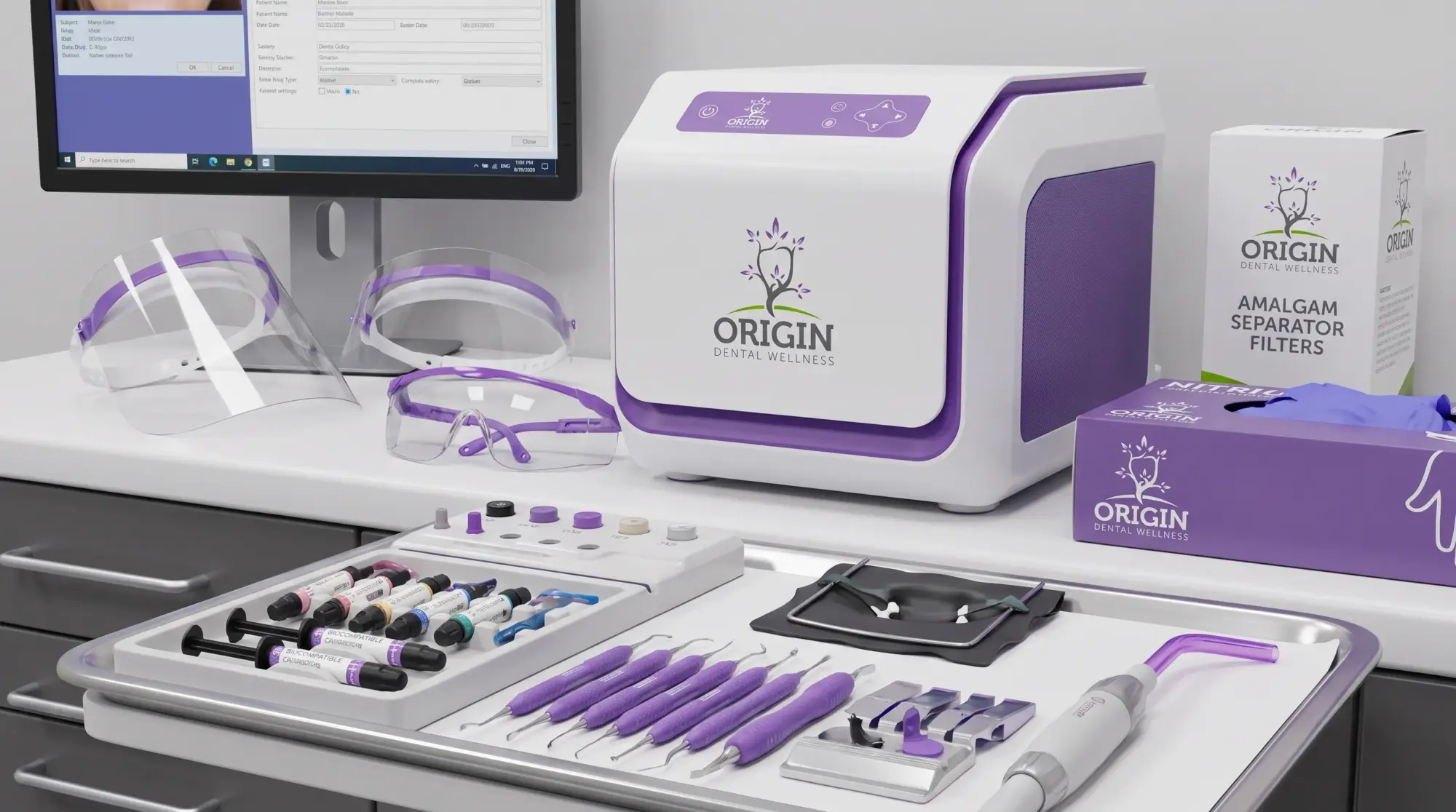
A SMART-informed setting may include protective barriers, high-volume evacuation, external air or filtration support, isolation of the tooth, sectioning the filling to reduce grinding, and careful cleanup. The purpose is to reduce exposure to vapor and particles as much as reasonably possible during the procedure.
For patients traveling from Broken Arrow, Jenks, Bixby, Owasso, Sand Springs, Oklahoma City, or neighboring states, it can be helpful to ask detailed questions before you schedule. You want to know not only whether a practice removes amalgam, but how it removes amalgam.
7. Cost and insurance should be clear before treatment
Mercury filling removal costs vary because the main treatment need is not identical for every tooth. A small replacement filling is different from a larger restoration, and a structurally compromised tooth may require a different approach.
At Origin Dental Wellness, pricing information is provided upon request once a treatment is recommended. The new patient appointment is over $500 and is designed to be a highly comprehensive visit with extensive insight and customized recommendations for your overall dental health. Future treatment or follow-up visits may be recommended after that evaluation.
Origin Dental Wellness is out-of-network for all insurance providers. Payment is due in full on the day of your appointment, then our team files with your insurance company so they can reimburse you at the out-of-network rate, subject to their approval. Treatment is recommended based on clinical judgment and biological priorities, not on whether insurance is likely to cover it.
The practice does not directly offer financing or pay-over-time plans, but it does accept the CareCredit credit card. CareCredit is a third-party option, and patients can review its terms directly before using it.
For more context, you can review Origin Dental Wellness’s article on what it may cost to have mercury removed, keeping in mind that your individual recommendation may differ.
What SMART-style protection is designed to reduce
The purpose of SMART-style precautions is to reduce exposure pathways during removal. The exact plan depends on the clinical situation, but the principles are consistent: isolate, capture, protect, and restore with intention.
| Safety focus | Why it matters before removal |
|---|---|
| Patient protection | Helps reduce inhalation and swallowing of particles or vapor during the procedure |
| Dental team protection | Supports a safer environment for the team repeatedly performing these procedures |
| Tooth isolation | Helps keep the treatment field controlled and limits spread of debris |
| High-volume suction and filtration | Helps capture particles and vapor closer to the source |
| Sectioning the filling | Can reduce unnecessary grinding of the amalgam material |
| Biocompatible replacement planning | Helps avoid replacing one unwanted material with another poor fit |
This is why mercury filling removal should be viewed as both a dental procedure and a materials decision. The technique matters, but so does the long-term restoration.
How to prepare for a biological mercury removal consultation
Before your appointment, gather as much information as you can. You do not need to diagnose yourself or decide your own treatment plan, but the more complete your history is, the better the conversation can be.
Bring or be ready to discuss:
- A list of current medications and supplements
- Known allergies or sensitivities, including metals, latex, fragrances, dental materials, or anesthetics
- Past dental records or X-rays if available
- A history of root canals, implants, crowns, extractions, orthodontics, or gum disease
- Current symptoms, even if they seem unrelated, such as jaw pain, bleeding gums, fatigue patterns, or inflammatory concerns
- Your priorities, such as lower-toxicity materials, cosmetic improvement, bite comfort, or whole-body health support
If you already know you react strongly to metals or dental materials, ask whether biocompatibility or hypersensitivity testing is appropriate before treatment begins. Testing is not necessary for every patient, but it can be valuable for patients with complex sensitivity histories.
Also ask how many fillings should be addressed in one visit. The answer depends on the number of fillings, their location, your health status, the complexity of the restorations, and your ability to tolerate longer appointments. A careful sequence is often better than rushing.
Questions to ask before mercury filling removal
The right questions can help you understand whether a practice’s approach aligns with your values and risk tolerance.
| Question | Why it matters |
|---|---|
| Do you place new mercury amalgam fillings? | Clarifies whether the practice is mercury-free |
| What precautions do you use when removing amalgam? | Helps distinguish mercury-free from mercury-safe care |
| How will you decide which fillings to remove first? | Shows whether the plan is individualized |
| What replacement materials do you recommend for my teeth? | Keeps the focus on long-term restoration quality |
| Do you offer material compatibility testing when appropriate? | Important for patients with allergy or sensitivity concerns |
| What imaging or diagnostics do you recommend first? | Helps identify structural, periodontal, or infection concerns |
| What should I expect financially before treatment? | Prevents confusion about payment, insurance, and follow-up care |
A biological dentist should be comfortable discussing not only how the filling is removed, but why a specific sequence and replacement material are being recommended.
What mercury filling removal is not
Mercury filling removal is not a guaranteed solution for every health concern. It is also not a substitute for medical care, periodontal treatment, nutrition support, airway evaluation, or ongoing preventive dentistry.
A biological dental approach recognizes that the mouth is connected to the body, but it does not promise that removing amalgam will resolve systemic symptoms. Patients with complex health concerns may need collaboration between dental, medical, and other qualified healthcare providers.
It is also not a reason to ignore the basics. Gum health, oral microbiome balance, sleep, nutrition, blood sugar regulation, inflammation, and hygiene habits still matter. A healthier mouth is built through a combination of safer materials, sound structure, lower inflammation, and consistent maintenance.
Frequently Asked Questions
Is mercury filling removal safe? Mercury filling removal can be performed with precautions designed to reduce exposure, but no dental procedure is completely risk-free. At Origin Dental Wellness, Dr. Toler uses a biological, SMART-informed approach to help minimize avoidable mercury vapor and particle exposure during removal.
Should I remove all my mercury fillings at once? Not necessarily. The best sequence depends on the number of fillings, their size, tooth condition, bite forces, your health history, and your sensitivity level. A consultation is needed before recommending timing.
What replaces mercury fillings after removal? Replacement options may include composite, porcelain, ceramic, or another material depending on the tooth and patient. Biological dentistry places special emphasis on durability, biocompatibility, and patient-specific sensitivities.
Do I need allergy or biocompatibility testing first? Some patients may benefit from testing, especially those with metal allergies, autoimmune concerns, chemical sensitivities, or prior reactions to dental materials. Dr. Toler can discuss whether testing such as MELISA is relevant for your case.
Will insurance cover mercury filling removal? Coverage varies by plan and is not guaranteed. Origin Dental Wellness is out-of-network for all insurance providers. Patients pay in full on the day of the appointment, and our team files with insurance so reimbursement can be sent to the patient if approved.
Is mercury filling removal only for people with symptoms? No. Some patients consider removal because a filling is cracked, leaking, cosmetically undesirable, or inconsistent with their lower-toxicity lifestyle. Others have symptoms or sensitivity concerns. The decision should be individualized.
Ready to talk about mercury filling removal in Tulsa?
If you are considering mercury filling removal in Tulsa, Oklahoma, the first step is not to schedule drilling. The first step is a comprehensive biological evaluation that looks at your teeth, materials, sensitivities, oral microbiome, and overall health context.
At Origin Dental Wellness, Dr. Shannon Toler provides biological dental care for patients in Tulsa and the surrounding metro, including Broken Arrow, Jenks, Bixby, Owasso, and Sand Springs. The practice also sees patients who travel from Oklahoma City and neighboring states for a more health-centered approach.
If you are ready to understand your options, contact Origin Dental Wellness to request a new patient appointment and begin with a plan built around safety, biocompatibility, and your long-term wellness priorities.