
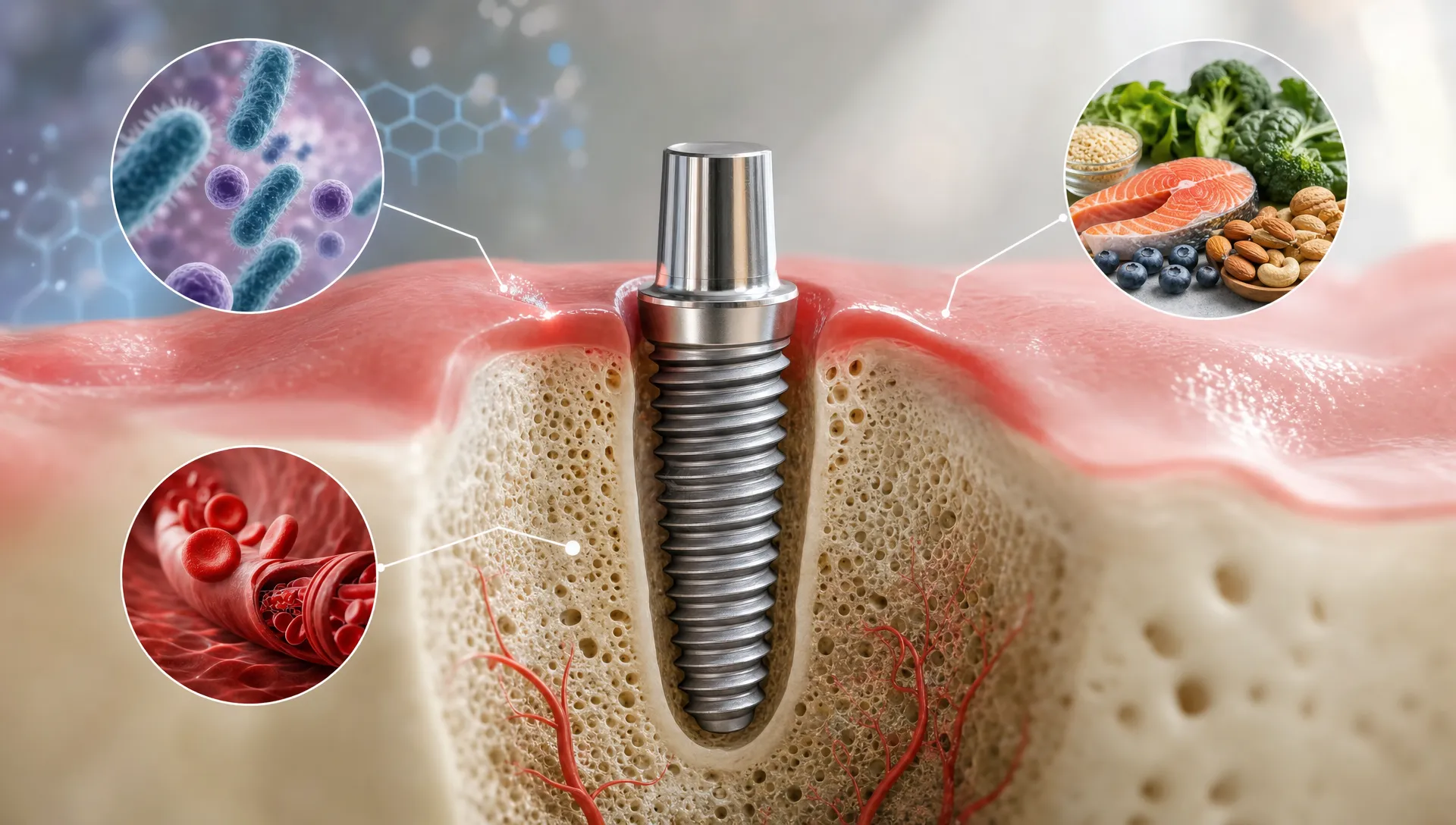
Replacing a missing tooth is never just about filling a gap in your smile. Chewing, digestion, jawbone stability, facial support, speech, sleep quality, and confidence can all be affected when teeth are lost. That is why dental implants are often discussed as a long-term tooth replacement option, especially for patients who want function that feels closer to a natural tooth.
From a whole-body health perspective, however, the conversation should go deeper than the implant itself. A dental implant is placed into living bone and surrounded by living gum tissue. It depends on your immune system, circulation, oral microbiome, bone metabolism, nutrition, and daily habits to heal and remain stable.
In other words, dental implants are not just a dental decision. They are a biological decision.
Dental implants are a health decision, not only a cosmetic one
A dental implant is typically a small post placed in the jawbone to support a crown, bridge, or denture. When healing goes well, the bone grows around the implant surface through a process called osseointegration. This creates a stable foundation for chewing and helps restore function after tooth loss.
The FDA explains that dental implants can improve quality of life, but they also require careful planning because complications can include infection, nerve injury, sinus issues, bone loss, or implant failure. Those risks do not mean implants are unsafe for everyone. They do mean that the best outcomes usually come from looking at the full picture before surgery.
At a biological dental practice, that full picture includes questions such as:
- Is there active gum disease or infection in the mouth?
- Is the jawbone strong enough to support an implant?
- Are there medical conditions that could affect healing?
- Which implant material is most compatible with the patient?
- How can inflammation and bacterial burden be reduced before and after treatment?
- What maintenance plan will protect the implant over time?
This is where a holistic approach differs from a purely mechanical one. The goal is not simply to place a replacement tooth. The goal is to restore oral function in a way that supports the health of the person attached to the mouth.
The oral-systemic connection matters for implant planning
The mouth is not separate from the rest of the body. Oral bacteria, inflammation, immune response, and nutrient status can influence healing, and chronic oral infection can add stress to the body.
Origin Dental Wellness takes this connection seriously through a philosophy of health-centered dentistry. For dental implants, that means the dentist should evaluate not only the missing tooth, but also the environment the implant will live in.
If the mouth has uncontrolled periodontal disease, high levels of harmful biofilm, or an unresolved infection at the extraction site, the body may not be ready for implant placement. If blood sugar is poorly controlled, if a patient smokes, or if nutrition is compromised, healing may be less predictable. If bone has been lost after years without a tooth, the implant may need additional support before it can be placed safely.
A healthy implant starts before the day of surgery.
How dental implants interact with the body
Dental implants are designed to be biocompatible, but “biocompatible” does not mean “one-size-fits-all.” Every patient brings a unique biology to the process.
Bone integration
The most important biological event after implant placement is osseointegration. The implant needs stable bone, healthy blood flow, and adequate healing time. If the body cannot form and maintain bone well, the implant may not become stable enough for long-term function.
Bone quality can be affected by many factors, including tooth loss, infection, periodontal disease, trauma, certain medications, smoking, hormonal changes, and nutritional deficiencies. This is why an implant consultation should include more than a quick look at the empty space. The dentist needs to assess the bone in three dimensions and determine whether the site can support an implant.
For a deeper look at this topic, Origin Dental Wellness has explained why a strong bone foundation matters for dental implants.
Biofilm and inflammation
An implant cannot get a cavity, but the tissues around it can become inflamed or infected. Dental plaque is a biofilm, which means bacteria live in a sticky, organized community on teeth, gums, and implant surfaces. If that biofilm is not controlled, the gums around an implant can become inflamed.
The American Academy of Periodontology describes peri-implant diseases as inflammatory conditions affecting the tissues around dental implants. Peri-implant mucositis affects the gum tissue and may be reversible when treated early. Peri-implantitis is more serious because it involves progressive bone loss around the implant.
This is one reason biological implant planning often includes attention to oral bacteria, gum health, salivary diagnostics, and maintenance care. The cleaner and healthier the oral environment, the better the chances that an implant can function without becoming another inflammatory burden.
Material compatibility
Most dental implants are made from titanium or zirconia. Titanium has a long history of use and is widely studied. Zirconia is a ceramic option often considered by patients who prefer a metal-free approach.
Neither material is automatically best for every person. Titanium may be appropriate for many patients, while zirconia may be preferred for others based on esthetics, tissue response, personal health goals, or a desire to avoid metals. A biological dentist can help patients think through material choices in the context of medical history, oral conditions, bite forces, bone volume, and long-term maintenance.
The key is individualized care. Implant material should be selected because it fits the person, not because it is the default.
Whole-body factors that can influence implant success
Dental implant outcomes are shaped by local oral conditions and systemic health. The table below summarizes several factors worth discussing before treatment.
| Health factor | Why it matters for dental implants | What to discuss before treatment |
|---|---|---|
| Gum disease and oral biofilm | Harmful bacteria can inflame tissue around implants and contribute to bone loss | Periodontal evaluation, biofilm testing, salivary diagnostics, home care habits |
| Blood sugar control | Poorly controlled diabetes can affect immune response and wound healing | A1C history, medical management, timing of surgery, healing expectations |
| Bone volume and density | The implant needs enough stable bone for integration and long-term support | 3D imaging, bone grafting needs, previous infection or extraction history |
| Smoking or nicotine use | Nicotine can reduce blood flow and increase risk of complications | Cessation plan, healing timeline, risk discussion |
| Nutrition | Protein, minerals, and fat-soluble vitamins support tissue repair and bone metabolism | Diet quality, vitamin D status, protein intake, physician guidance when needed |
| Medications and medical history | Some medications and conditions can affect bone healing, bleeding, or immune response | Full health history, physician collaboration, surgical precautions |
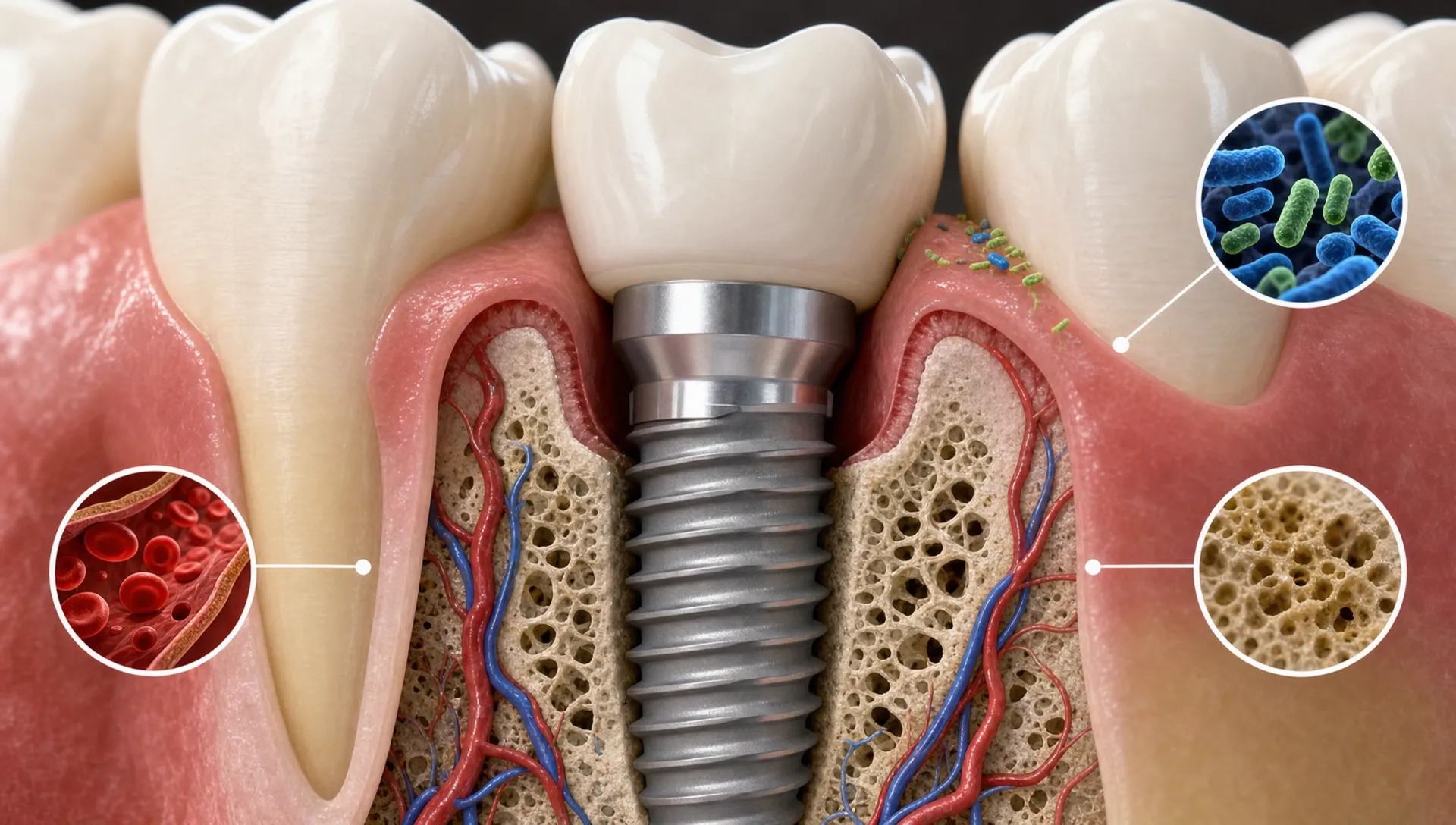
Metabolic health and healing deserve attention
Healing after implant surgery is an active biological process. Your body has to manage inflammation, build new tissue, form bone, remodel bone, and defend the area from harmful bacteria. This takes energy and resources.
Blood sugar is one example. The CDC notes that people with diabetes are more likely to have gum disease, and oral infections can make blood sugar harder to manage. For implant patients, this does not automatically mean diabetes rules out treatment. It means blood sugar control, medical collaboration, and timing matter.
Nutrition is another major factor. Adequate protein supports collagen formation and wound repair. Vitamin D, calcium, magnesium, vitamin K2, and other nutrients play roles in bone metabolism. A patient who is undernourished, chronically inflamed, or recovering poorly may need support before elective implant surgery.
This same principle applies across wellness care. People pursuing better performance or longevity often use data-driven fitness, nutrition, and longevity testing to understand their body instead of guessing. Implant planning benefits from the same mindset: gather meaningful information, identify risk factors, and personalize the plan.
What a biological approach to dental implants may include
A biological approach to dental implants does not mean avoiding modern technology. In many cases, it means using advanced diagnostics and minimally stressful protocols to make treatment more precise and more compatible with the patient’s health.
At Origin Dental Wellness, implant planning is part of a broader commitment to holistic, patient-centered dentistry. Depending on the individual case, a biological implant approach may include:
- A detailed review of dental history, medical history, medications, and health goals
- Evaluation for periodontal disease, oral biofilm, and salivary risk factors
- Assessment of bone quality and quantity using advanced diagnostics when appropriate
- Discussion of biocompatible implant and restorative materials
- Careful management of infection or inflammation before implant placement
- Healing support such as ozone therapies, PRP, or PRF when clinically appropriate
This approach is especially important when a tooth is being removed because of chronic infection, fracture, periodontal disease, or a failing root canal. The implant site should be as clean and biologically prepared as possible before a long-term replacement is placed.
Dental implants, root canals, and chronic infection
Many patients consider implants after losing a tooth or after learning that a tooth can no longer be predictably restored. In some cases, the tooth has an old root canal, a hidden infection, or bone loss that was not obvious on a traditional dental X-ray.
From a whole-body health perspective, the priority is to identify and resolve infection rather than simply replace the visible tooth structure. Chronic dental infections may not always cause pain, but they can still affect local bone and surrounding tissues. Before an implant is placed, the dentist should understand why the tooth failed, whether infection is present, and whether the bone has healed enough to support the new restoration.
This is one reason advanced diagnostics are valuable. They help the dentist make decisions based on what is happening in the bone and surrounding tissues, not just what can be seen in the mouth.
Maintenance is not optional
Dental implants can last for many years, but they are not maintenance-free. In fact, the long-term health of an implant depends heavily on the patient’s daily care and professional follow-up.
An implant crown should be cleaned carefully at the gumline and between the teeth. Patients may need special floss, interdental brushes, water irrigation, or other tools depending on the shape of the restoration. Professional maintenance visits allow the dental team to check gum inflammation, bite forces, tissue health, bone levels, and early signs of peri-implant disease.
If you notice bleeding, swelling, tenderness, a bad taste, pus, loosening, or pain around an implant, it is important to schedule an evaluation promptly. Early inflammation is usually easier to manage than advanced bone loss.
A whole-body approach also means continuing to support the terrain that helped the implant heal in the first place. Stable blood sugar, good nutrition, restful sleep, stress management, and avoiding nicotine all help protect the investment.
Questions to ask before choosing dental implants
The best implant consultation should leave you feeling informed, not rushed. Before committing to treatment, consider asking your dentist:
- Do I have any active gum disease or infection that needs to be treated first?
- Do I have enough bone for an implant, or will I need grafting?
- Which implant material do you recommend for me, and why?
- How do you evaluate oral bacteria and inflammation before surgery?
- What steps do you take to support healing after placement?
- How will my medical history affect implant timing or risk?
- What maintenance schedule will I need after the final restoration?
If the answers focus only on the implant post and not the surrounding biology, it may be worth seeking a more comprehensive perspective.
Frequently Asked Questions
Are dental implants safe for whole-body health? Dental implants are widely used and can be a healthy tooth replacement option when properly planned, placed, and maintained. Whole-body safety depends on factors such as infection control, bone health, material selection, medical history, and long-term hygiene.
Can dental implants cause inflammation? The implant itself is designed to be biocompatible, but the tissues around it can become inflamed if harmful biofilm builds up or if the implant is overloaded by bite forces. This is why periodontal health and maintenance visits are essential.
Is zirconia better than titanium for dental implants? Zirconia is a ceramic, metal-free option, while titanium has a long clinical history and broad use. The better choice depends on the patient’s anatomy, health history, esthetic needs, material preferences, and the dentist’s clinical judgment.
Do I need to be healthy before getting a dental implant? You do not have to be perfectly healthy, but uncontrolled inflammation, smoking, poor blood sugar control, untreated gum disease, or significant nutritional deficiencies can affect healing. A good implant plan addresses risk factors before surgery when possible.
Can an implant replace a tooth with a failed root canal? Often, yes, but the area must be evaluated carefully for infection, bone loss, and healing capacity. The goal is to remove the source of infection, allow the site to recover, and place the implant only when the foundation is appropriate.
How long do dental implants last? Many implants function for a long time, but no treatment can be guaranteed for life. Longevity depends on surgical planning, bone support, material choice, bite forces, oral hygiene, professional maintenance, and overall health.
Ready to look at dental implants through a whole-body lens?
If you are considering dental implants, the most important question is not simply whether an implant can fit in the space. It is whether your mouth and body are ready to support it.
Origin Dental Wellness offers holistic, biological dental care in Tulsa with a focus on patient-centered planning, biocompatible materials, advanced diagnostics, and whole-body health. To explore whether dental implants are the right option for you, connect with Origin Dental Wellness and schedule a personalized consultation.