
Being told you may need a root canal can feel like a crossroads, especially if you are trying to live with fewer toxins, manage immune sensitivity or understand how your mouth affects the rest of your body. In Tulsa and across Oklahoma, many patients come to Origin Dental Wellness because they want a second way to think about infected or painful teeth, one that does not treat the tooth as separate from the person.
In biological dentistry, root canal alternatives are not about ignoring infection or choosing the most “natural” option at any cost. They are about asking better questions: Is the tooth still vital? What does the surrounding bone look like? What microbial burden is present? Which materials are most compatible with this patient? What choice best supports long-term oral and systemic health?
At Origin Dental Wellness, Dr. Shannon Toler, DDS, BCHN, AIAOMT, FAAOSH, FMRII, evaluates these decisions through a biological and nutrition-informed lens. The goal is not to promise a single outcome, but to help each patient understand the safest, most biocompatible path available for their situation.
Root canal alternatives are a diagnostic pathway, not one procedure
A conventional root canal is designed to remove inflamed or infected pulp tissue from inside a tooth, disinfect the canal space and seal the tooth so it can remain in the mouth. The National Institute of Dental and Craniofacial Research describes this as a standard treatment when the soft tissue inside the tooth becomes infected or inflamed.
A biological practice asks a different set of follow-up questions. If a tooth has lost its blood supply and nerve function, can it truly be considered biologically healthy long term? Could microorganisms remain in microscopic anatomy that is difficult to fully clean? How does the patient’s immune system respond to that ongoing burden? These questions are part of why Origin Dental Wellness chooses to look for alternatives rather than provide root canal therapy.
This does not mean “wait and see” when infection is present. Untreated dental infection can worsen, spread and become urgent. If you have facial swelling, fever, difficulty swallowing or rapidly increasing pain, you should seek prompt dental or medical attention. A biological approach is careful, but it is not passive.
For a deeper explanation of the practice’s philosophy, Origin has also outlined why biological dentists recommend avoiding root canals from an oral-systemic perspective.
What Dr. Toler evaluates before recommending an alternative
Root canal alternatives depend on diagnosis. A tooth that is mildly irritated after a large filling is very different from a tooth with a dead nerve, draining abscess or fracture into the root. That is why the first step is not choosing a procedure. The first step is understanding what is actually happening.
At Origin Dental Wellness in Tulsa, Dr. Toler may consider the patient’s symptoms, dental history, bite forces, existing restorations, periodontal health, immune status and whole-body health history. Biological tools such as cone beam CT imaging, salivary or biofilm assessment, material compatibility review and hypersensitivity testing may help clarify the plan when clinically appropriate.
The oral-systemic connection matters here. The American Academy for Oral Systemic Health focuses on the relationship between oral conditions and overall health, which aligns with the way a biological dental evaluation looks beyond the tooth alone.
| Clinical finding | Why it matters biologically | Possible direction |
|---|---|---|
| Deep decay near the nerve | The tooth may be inflamed but not necessarily non-vital | Conservative restoration, ozone as an adjunct or close monitoring may be considered |
| Cracked tooth | Cracks can allow bacteria to enter deeper structures | Stabilization, restoration or extraction may be discussed depending on depth |
| Abscess or bone change | Infection may extend beyond the tooth | Biological extraction and site support may be considered |
| Existing root canal tooth | Symptoms or imaging changes may suggest failure or chronic infection | Evaluation for removal, replacement planning or referral may be appropriate |
| Material sensitivity concerns | Some patients react poorly to certain metals, resins or cements | Biocompatibility testing and lower-toxicity materials may guide care |
This kind of evaluation is especially important for toxin-sensitive patients, immune-compromised patients and those traveling from Oklahoma City, Broken Arrow, Jenks, Bixby, Owasso, Sand Springs or neighboring states for a more comprehensive biological opinion.
When the tooth may be preserved without a root canal
Sometimes a patient seeks root canal alternatives before the tooth has reached the point of irreversible infection. This is the ideal time to intervene because preserving living tooth structure is usually preferable when it can be done responsibly.
Biological dentistry may focus on removing decay conservatively, supporting the tooth with a biocompatible restoration, reducing bacterial load and protecting the tooth from further structural stress. Ozone therapy may be used as an antimicrobial adjunct in certain situations, depending on the diagnosis. It is not a universal substitute for all root canals, and it is not a guarantee that a severely infected tooth can be saved.
The key distinction is vitality. If the tooth is still alive and the inflammation is reversible, the conversation may center on preserving the tooth. If the nerve has died or infection is established in the bone, the conversation changes.
When removal becomes the biological alternative
When a tooth is non-vital, structurally unsalvageable or associated with persistent infection, a biological extraction may be the preferred alternative. In this context, extraction is not simply “pulling the tooth.” It is a protocol-centered procedure designed to reduce microbial burden, support healing and prepare the area for future function.
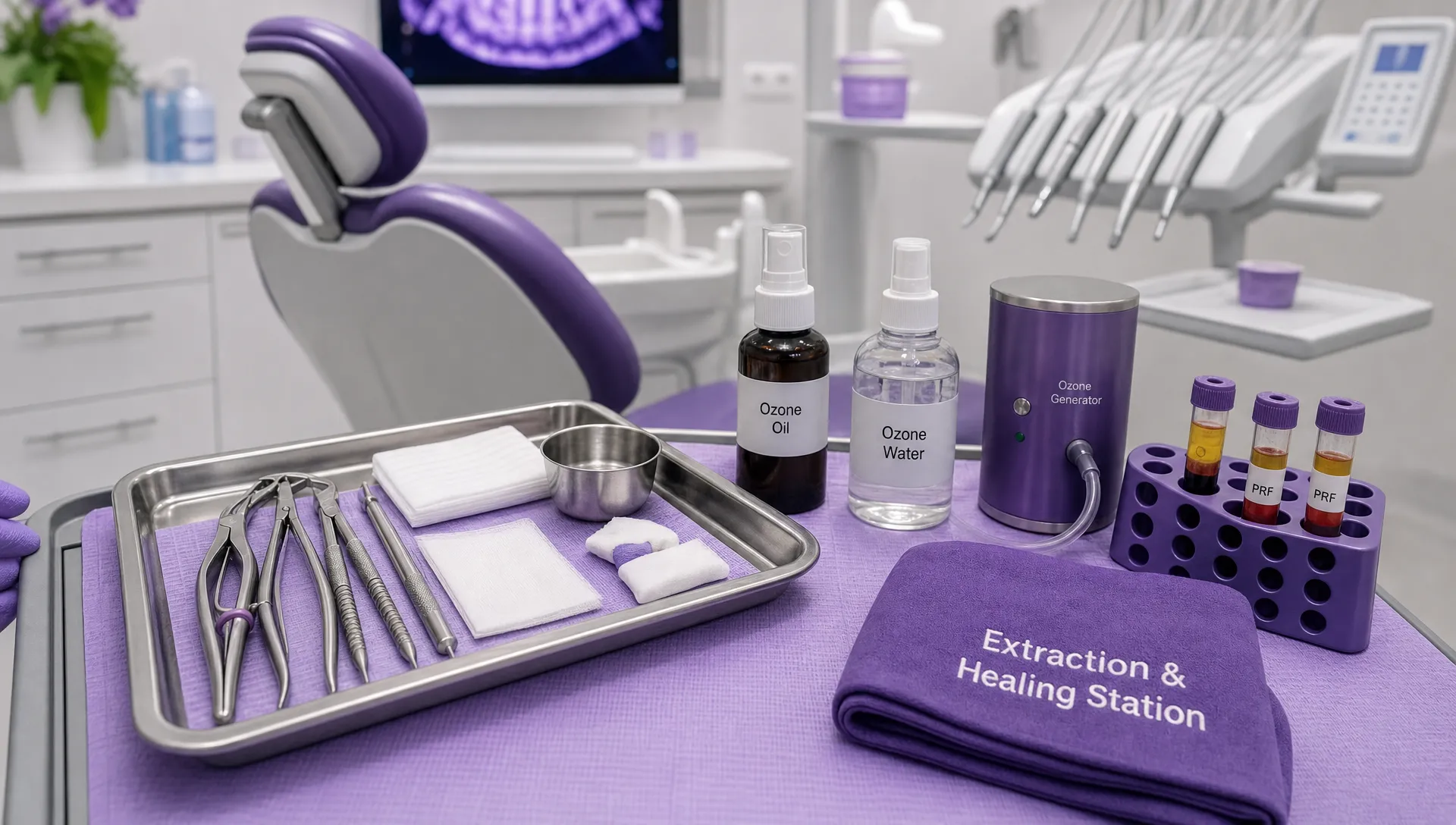
A biological extraction plan may include careful removal of the tooth, attention to infected or inflamed tissue, ozone therapy and the use of PRP or PRF when appropriate. PRP and PRF are derived from the patient’s own blood and are used in many biologically oriented practices to support the body’s natural healing response. Whether they are appropriate depends on the patient’s health, the site and Dr. Toler’s clinical judgment.
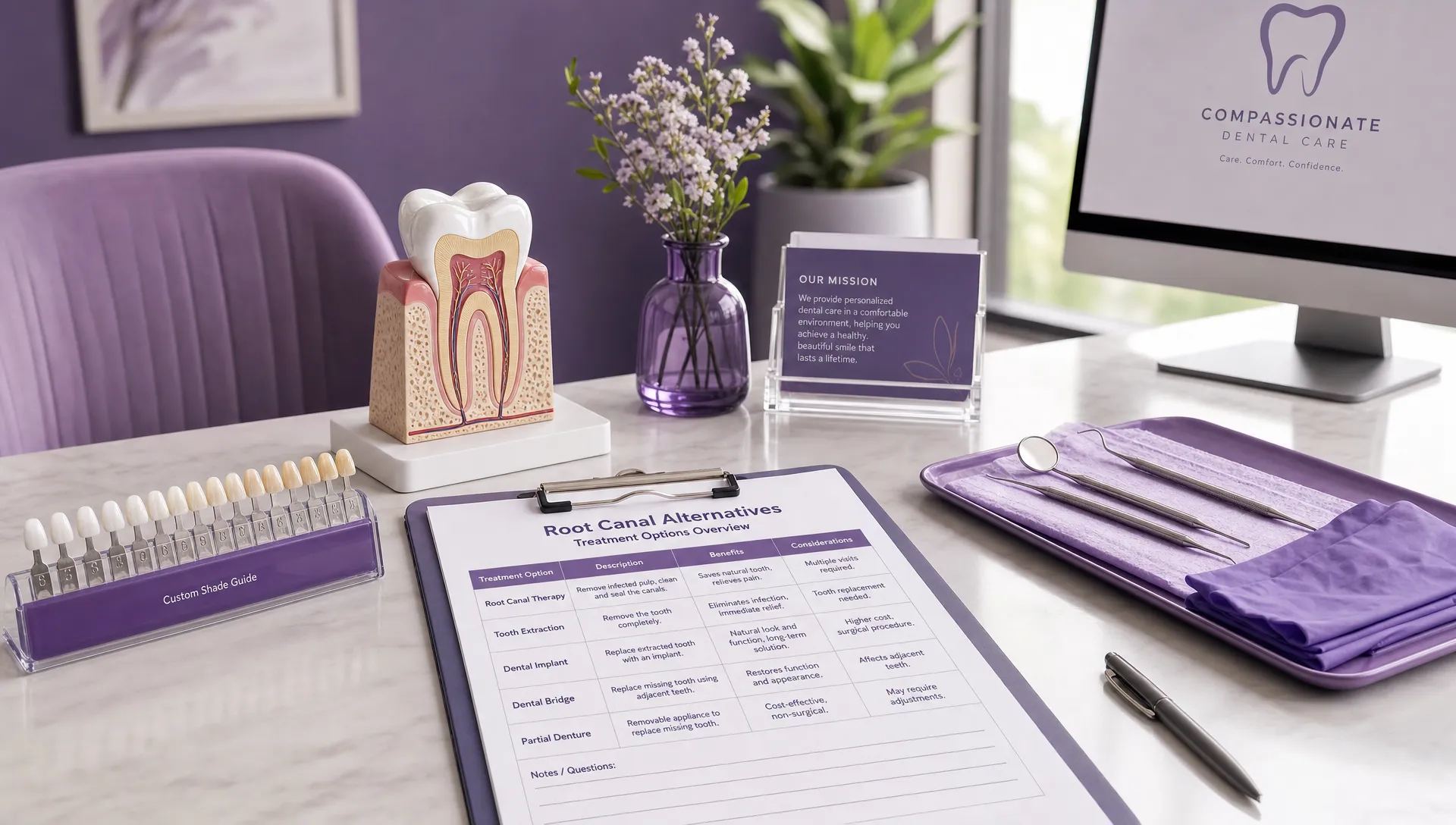
After extraction, the next question is function. Missing teeth can affect chewing, bite balance, speech and neighboring tooth movement. Replacement options may include a ceramic implant, bridge or removable option, depending on bone health, bite forces, medical factors, cosmetic goals and material compatibility. Origin Dental Wellness does not treat replacement as a one-size-fits-all decision.
Material choice is part of the treatment, not an afterthought
For many patients searching for root canal alternatives, the material used afterward matters as much as the procedure itself. A tooth-colored filling, crown, implant or cement is not automatically biocompatible for every person. Biological dentistry considers how materials interact with the immune system, oral microbiome and surrounding tissues over time.
This is where hypersensitivity testing and material review may be helpful. MELISA testing may be considered when metal sensitivity is a concern. For toxin-sensitive patients, Dr. Toler may also evaluate existing dental materials, prior reactions, medical history and the patient’s overall exposure burden.
Origin’s material philosophy is aligned with lower-toxicity care: fluoride-free recommendations, mercury-aware protocols and a preference for biocompatible materials whenever possible. If a patient has mercury amalgam fillings, removal should never be casual. Origin Dental Wellness uses mercury-safe principles, including SMART-protocol concepts, when removal is clinically recommended.
If you want to understand this decision-making process more broadly, the practice has a helpful guide on how a bio dentist chooses safer materials.
How biological dentistry changes the conversation
Browsing dental websites can be confusing because many practices list similar treatment categories: crowns, implants, cosmetic care, emergency visits and family dentistry. For example, a practice offering general and cosmetic dental care in Ettalong and Kincumber may organize services by procedure type, which is common in dentistry.
A biological consultation adds another layer to those categories. The question is not only, “Can this tooth be fixed?” It is also, “What is the biological cost of this option for this patient?” That shift changes how infection, materials, imaging, bite forces and medical history are weighed.
| Decision point | Conventional question | Biological question |
|---|---|---|
| Tooth preservation | Can the tooth remain in the mouth? | Can the tooth remain without creating an ongoing biological burden? |
| Infection control | Can the canal be cleaned and sealed? | Is there a more predictable way to reduce microbial burden for this patient? |
| Restoration | What material will restore the tooth? | Which material is most compatible with the patient’s biology? |
| Imaging | What is visible on standard X-rays? | Would 3D imaging change the diagnosis or risk assessment? |
| Whole-body context | Is the tooth symptom-free? | How does the patient’s immune, inflammatory and toxin-sensitivity profile affect the plan? |
Organizations such as the International Academy of Oral Medicine and Toxicology have helped bring more attention to biocompatibility, mercury safety and toxicology in dentistry. Origin Dental Wellness applies that same biological mindset to root canal alternatives, especially for patients who feel conventional dental decisions have not fully addressed their health concerns.
Questions to ask when you are deciding what to do
If another provider has recommended a root canal, it is reasonable to seek a biological evaluation before making a final decision, as long as you are not delaying urgent care. Bring your X-rays, treatment notes and a list of symptoms if you have them.
Useful questions include:
- Is the tooth still vital, or does it appear non-vital?
- Is there evidence of infection in the surrounding bone?
- Would cone beam CT imaging provide information that a standard X-ray might miss?
- Are there conservative options before extraction, or is the tooth structurally compromised?
- If extraction is recommended, how will the site be cleaned and supported?
- What replacement options are compatible with my health history and material sensitivities?
- How will this plan affect my bite, chewing and long-term oral function?
The answers may not point to the easiest option, but they should make the reasoning clearer. That is the value of a comprehensive biological treatment plan.
For patients who want a broader look at this process, Origin explains how a biological dentist builds a personalized treatment plan around diagnostics, patient priorities and whole-body health.
Frequently Asked Questions
Can ozone therapy replace a root canal? Ozone may be used as an antimicrobial adjunct in biological dentistry, but it is not a universal replacement for root canal therapy. Whether it is appropriate depends on the vitality of the tooth, the amount of decay, the presence of infection and the structural condition of the tooth.
Does Origin Dental Wellness perform root canals? No. Origin’s approach is to evaluate root canal alternatives rather than provide root canal therapy. Dr. Toler will assess whether conservative care, biological extraction, replacement planning or another path is appropriate for your situation.
Is extraction always the best biological option? Not always. If a tooth is still vital and can be restored conservatively, preserving it may be discussed. If the tooth is non-vital, fractured or associated with infection, extraction may become the more biologically appropriate option.
Are ceramic implants always recommended after extraction? No. Ceramic implants may be an option for some patients, but not everyone is a candidate. Bone health, bite forces, medical history, esthetic goals, budget and material compatibility all matter.
What if I am immune-compromised or highly toxin-sensitive? These factors should be discussed before treatment. A biological evaluation may include a more detailed review of materials, infection burden, healing capacity and coordination with your medical provider when appropriate.
Considering root canal alternatives in Tulsa?
If you are facing a root canal recommendation and want a biological perspective, Origin Dental Wellness can help you evaluate your options with a whole-body lens. Patients visit Dr. Shannon Toler in Tulsa from across the metro, throughout Oklahoma and from neighboring states because they want dentistry that considers infection, biocompatibility, low-toxicity materials and long-term health together.
A comprehensive new patient visit is designed to provide extensive insight and customized recommendations, not a quick procedure quote. Once a treatment is recommended, pricing information is available upon request.
To learn more or request an appointment, visit Origin Dental Wellness and take the next step toward a more informed decision about root canal alternatives.