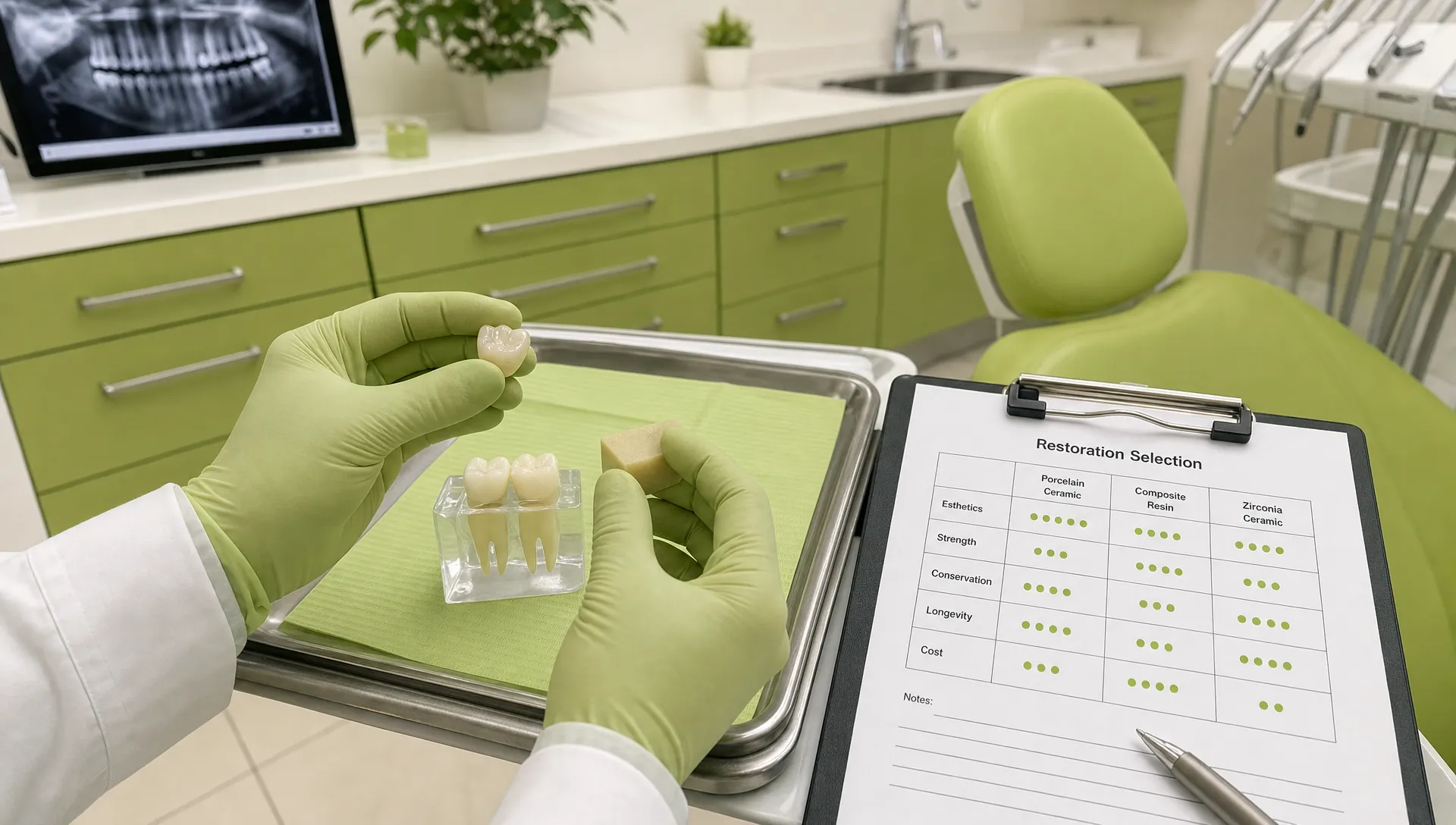
If you are searching for a biomimetic dentist in Tulsa, you may want more than a tooth-colored filling. You may want to understand whether damaged tooth structure can be preserved, how a restoration will handle chewing forces and whether its materials fit your health history. Those questions connect biomimetic principles with biological dentistry, but the two approaches are not identical.
At Origin Dental Wellness, Shannon Toler, DDS, BCHN, AIAOMT, FAAOSH, FMRII, brings a biological perspective to restorative decisions. As a Biological Dentist and Board Certified Holistic Nutritionist, she considers the tooth’s condition alongside material compatibility and whole-person health.
Biomimetic and biological dentistry ask complementary questions
Biomimetic dentistry aims to restore teeth in ways that approximate their natural structure and mechanical behavior. Enamel provides a hard outer surface, while the underlying dentin supports it. Damage to either changes how a tooth responds to pressure.
A biomimetic approach therefore considers how much healthy tissue remains, whether weakened areas need protection and how a restoration can bond to the tooth. Preserving sound structure is an objective, not a reason to leave disease untreated.
Biological dentistry adds questions about material exposure, inflammation, the oral microbiome and the patient’s medical history. A restoration must be mechanically appropriate, but its ingredients and the environment surrounding it also matter.
For someone comparing results for biomimetic dentist,” the useful distinction is this: a tissue-preserving restoration and a biologically informed treatment plan should address both the damaged tooth and the person receiving treatment. The label alone does not explain the examination, materials or safeguards used.
Is the tooth healthy enough to restore?
Before choosing a filling, onlay or crown, the first decision is whether the tooth can support a restoration and what disease needs attention. An attractive restoration cannot compensate for an unresolved problem underneath it.
Decay depth and existing damage
The examination considers the location and extent of decay, previous restorations, remaining tooth walls and signs of cracks. Imaging can help assess areas that are not visible directly, although no single image reveals every crack or establishes the full condition of a tooth.
Early mineral loss is different from a cavity with missing tooth structure. The National Institute of Dental and Craniofacial Research explains that early decay can sometimes be stopped or reversed before a cavity forms. Once a cavity develops, the treatment decision changes.
A biomimetic dentist should explain what the examination reveals and why monitoring, preventive care or a restoration is appropriate. Neither filling every suspicious area nor delaying every restoration is a sound universal rule.
Pulp health and symptoms
The pulp contains the tooth’s nerves and blood vessels. A history of lingering temperature sensitivity, spontaneous pain, trauma or swelling can change the treatment discussion. Symptoms, examination findings and appropriate diagnostic tests must be interpreted together; pain alone does not identify the cause.
At Origin Dental Wellness, Dr. Toler evaluates these findings before recommending restorative care. The practice does not offer root canal therapy. When pulp disease or infection changes the tooth’s prognosis, she discusses options consistent with the practice’s biological approach, including preservation when feasible or removal and replacement when indicated.
The practice’s explanation of how biological dentistry approaches root canal alternatives provides more context. This is a practice-specific treatment philosophy, not a claim that every tooth with sensitivity needs extraction.
How much healthy tooth can be preserved?
Removing tooth structure is irreversible. Restorative planning should distinguish tissue that is diseased or mechanically unsound from tissue that can remain useful.
Choosing the extent of coverage
A small defect may need a different restoration from a tooth with a large existing filling and a weakened cusp. Depending on the findings, the discussion may include a direct bonded filling, a partial-coverage restoration such as an onlay or a full crown.
Conservative care does not always mean the smallest possible filling. If a thin cusp is likely to fracture, protecting it may preserve more tooth over time than leaving it unsupported. Conversely, full coverage should have a reason beyond habit or appearance.
When evaluating a biomimetic dentist,” ask which healthy areas can remain and which areas need protection. The answer should relate to your tooth’s condition, not simply to a preferred restoration type.
Bite forces and crack behavior
Clenching, grinding and uneven contacts can place additional stress on a restored tooth. The location of a crack also matters: a limited surface crack is not equivalent to a fracture extending deep into the tooth or root.
These findings influence restoration design and whether additional bite protection should be discussed. They also affect prognosis. Bonding cannot make every cracked tooth predictably restorable.
| Finding before treatment | Why it matters for restoration planning |
|---|---|
| Substantial sound enamel | May provide useful surfaces for adhesive bonding |
| Thin or undermined cusp | May need protective coverage rather than a filling alone |
| Deep decay near the pulp | Requires evaluation of pulp health and treatment risks |
| Heavy bite contact or grinding history | May affect design and the need for protective measures |
| Damage extending below the gumline | Can complicate isolation, margins and restorability |
These are considerations for examination, not a way to choose treatment from a photograph or symptom description.
Can the restoration be bonded and maintained reliably?
Preserving structure is valuable only if the planned restoration can function in its actual environment. Access, moisture control, margin location and the available bonding surfaces all influence that decision.
Isolation and restoration margins
Adhesive procedures require careful control of saliva, blood and moisture. A defect extending below the gumline can make that control more difficult. It may also place a restoration edge where cleaning and inspection are harder.
Ask a biomimetic dentist how the tooth will be isolated and whether the proposed margins can be maintained. A technically conservative design is not automatically the better choice if reliable placement or future cleaning is compromised.
Mechanical suitability and material compatibility
Material selection involves more than choosing something white or metal-free. Strength, thickness requirements, bonding characteristics and the amount of remaining tooth structure all matter. Resins, ceramics and bonding agents also have different compositions.
At Origin Dental Wellness, Dr. Toler considers reported reactions and relevant health history when discussing materials. Hypersensitivity testing may be appropriate for particular concerns, but it does not guarantee that a patient will tolerate every component of a restoration. Medical allergy testing with a specialist can address certain metal sensitivity questions, though no single test screens every resin ingredient.
For that part of the decision, the practice explains how a biological dentist evaluates dental materials. Material compatibility and mechanical suitability need to be considered together.
What could undermine the restoration after placement?
A restoration repairs a specific defect. It does not, by itself, correct the conditions that contributed to decay, gum inflammation or fracture. Biological planning looks at those conditions before treating the tooth.
Saliva, biofilm and daily exposures
Dry mouth can increase decay risk and make oral comfort and maintenance more difficult. Medication use, medical conditions and other factors may contribute. The NIDCR’s guidance on dry mouth explains saliva’s protective role and why persistent dryness deserves evaluation.
Meal and beverage frequency, plaque accumulation, gum health and home-care habits also influence the environment around restoration margins. Salivary or biofilm diagnostics may be considered when they can help clarify that environment; testing is not automatically necessary for every restoration.
A worthwhile consultation with a biomimetic dentist should include how to reduce ongoing risk, not only how to replace missing structure. Origin Dental Wellness takes a fluoride-free approach, with individualized discussion of hygiene, nutrition, saliva support and other appropriate preventive measures. That is the practice’s choice, not a claim that fluoride-free care is universally superior.
Existing amalgam and removal precautions
If a tooth already contains amalgam, the decision to replace it should consider its condition, the tooth’s needs and the patient’s concerns. Replacement itself removes material and may affect remaining tooth structure.
When amalgam removal is recommended, Origin Dental Wellness chooses the IAOMT’s Safe Mercury Amalgam Removal Technique, or SMART. Its precautions are intended to reduce exposure during removal, not promise zero exposure or a particular health outcome.
For patients in Tulsa and the surrounding Oklahoma communities, this makes the planning conversation especially important: why replace the restoration, what tissue can be preserved and what safeguards will be used?
What should a biomimetic or biological dentist explain before treatment?
A useful consultation should leave you understanding the diagnosis, the proposed restoration and the alternatives. You do not need to master adhesive chemistry, but you should know why the recommendation fits your tooth.
Consider asking:
- What findings show that this tooth needs treatment now?
- Which healthy tooth structures can remain, and why does any cusp need coverage?
- How do pulp health, crack location and bite forces affect the prognosis?
- What materials and bonding agents are proposed, and does my reaction history warrant further evaluation?
- What preventive care and follow-up will help maintain the restoration?
Ask about limitations as well. Even carefully planned restorations can develop recurrent decay, wear, fracture or sensitivity. A credible explanation includes uncertainty rather than promising lifelong performance.
Origin Dental Wellness’s overview of personalized biological treatment planning explains how tooth-specific findings fit within the broader health assessment.
Frequently asked questions
Is biomimetic dentistry the same as biological dentistry? No. Biomimetic dentistry emphasizes preserving tooth structure and approximating natural mechanical behavior. Biological dentistry also considers whole-person health, material compatibility and exposure-related concerns. The approaches can complement each other.
Does a biomimetic approach mean I will not need a crown? No. A partial-coverage restoration may be appropriate for some teeth, while others need more extensive protection. Remaining structure, crack location, bite forces and the ability to place a reliable restoration guide that decision.
Can I choose a biomimetic dentist based on materials alone? Materials are only one part of the assessment. Diagnosis, pulp health, moisture control, restoration design and ongoing decay risk also matter. Ask how those findings influence the recommendation.
Should every old filling be replaced? No. Age or appearance alone does not establish a need for replacement. The decision should consider decay, fractures, function, material concerns and the risks of treatment, including loss of additional tooth structure.
To explore how Dr. Toler applies these principles clinically, review metal-free restorative dentistry and holistic dental nutrition guidance before scheduling through our Tulsa office.
Discuss your restoration options in Tulsa
Before agreeing to a filling or crown, make sure you understand what will be preserved, what needs protection and how your health history affects the plan.
If your search for a biomimetic dentist reflects a desire for conservative, biologically informed care, contact Origin Dental Wellness in Tulsa to discuss an evaluation with Dr. Shannon Toler. The practice serves patients across the surrounding metro and welcomes those traveling from elsewhere in Oklahoma and neighboring states. Recommendations depend on your examination and individual needs, not the search term alone.