

When you search for a cosmetic dentist near me, the results can look almost identical at first glance. Every practice may promise a brighter smile, modern technology, and beautiful before-and-after photos. But if your goal is a smile that looks healthy, balanced, and naturally yours, choosing the right dentist takes more than comparing reviews or picking the closest office.
Natural cosmetic dentistry is both art and healthcare. The best results respect your facial features, tooth structure, gum health, bite, and long-term wellness. A beautiful smile should not look pasted on, feel uncomfortable, or require unnecessary drilling to achieve a trend.
Here is how to evaluate a cosmetic dentist so you can feel confident about your choice and protect your oral health along the way.
What natural cosmetic dentistry should actually accomplish
A natural result is not simply a whiter result. In fact, teeth that are too opaque, too uniform, or too bright can be the first clue that cosmetic dentistry has been done. Natural teeth have subtle variation, translucency near the edges, gentle texture, and a shade that complements the face.
A cosmetic dentist focused on natural results should consider:
- Tooth shape and proportion in relation to your lips and face
- Shade, translucency, and how the teeth look in different lighting
- Gum symmetry and gum health
- How upper and lower teeth meet when you bite
- Whether the plan preserves as much natural tooth structure as possible
- How restorations will age, stain, or need maintenance over time
The goal is not to copy someone else’s smile. It is to create a result that looks like the healthiest, most confident version of your own.
Choose a dentist who starts with health, not a cosmetic menu
One of the biggest differences between a natural-looking result and an overdone result is where the process begins. A careful dentist will not jump straight to veneers, whitening, or bonding before understanding the condition of your teeth, gums, bone, bite, and existing restorations.
If you have gum inflammation, active decay, cracked teeth, failing fillings, or an unstable bite, cosmetic treatment may not last as long or look as good. For example, veneers placed on teeth with untreated grinding issues may chip. Whitening over unhealthy gums may increase sensitivity. Bonding over plaque-retentive areas may stain faster.
This is especially important if you value a holistic or biological approach. Oral health is closely connected to overall health, and cosmetic treatment should not ignore inflammation, material compatibility, or the body’s ability to heal. Origin Dental Wellness explains this broader philosophy in its guide to health-centered dentistry, which is a helpful lens for anyone who wants cosmetic care that supports more than appearance.
A strong consultation should include a complete exam, not just a quick look at your smile. Ask whether the dentist evaluates gum health, bite patterns, existing dental materials, and risk factors before recommending cosmetic work.
Verify experience, training, and case fit
Cosmetic dentistry is not just one procedure. It can involve whitening, bonding, ceramic veneers, crowns, implants, gum contouring, replacement of old restorations, or a combination of treatments. Different dentists may have different strengths, and not every cosmetic case requires the same skill set.
It is also useful to know that cosmetic dentistry is not listed as a dental specialty by the ADA’s National Commission on Recognition of Dental Specialties and Certifying Boards. That does not mean a dentist cannot be excellent at cosmetic work. It means you should look beyond the label and ask about actual training, continuing education, and experience with cases like yours.
During your consultation, ask questions such as: How often do you treat cases like mine? Do you use a dental lab that specializes in natural esthetics? Can I see examples of patients with similar starting points? What steps do you take to make the result blend with my face and existing teeth?
A confident dentist should be comfortable discussing both the possibilities and the limitations of your case.
Look for a conservative plan, not a one-size-fits-all procedure
Natural cosmetic dentistry usually favors the least invasive option that can predictably meet your goals. Sometimes that is whitening and minor bonding. Sometimes it is replacing old restorations with better-matched materials. Sometimes porcelain or ceramic restorations are appropriate, especially when teeth are structurally compromised.
A thoughtful dentist should explain why a specific option is being recommended and what alternatives exist.
| Smile concern | Conservative discussion may include | More advanced care may be considered when |
|---|---|---|
| Mild discoloration | Professional whitening, stain management, hygiene changes | Internal discoloration, old restorations, or severe staining affect the final shade |
| Small chips or uneven edges | Polishing, reshaping, composite bonding | Tooth structure is weak, fractured, or heavily restored |
| Minor spacing | Bonding or orthodontic consultation | Spaces are large or bite alignment affects stability |
| Old visible fillings or crowns | Replacement with better-matched materials | Restorations are leaking, cracked, or structurally failing |
| Missing or non-restorable teeth | Tooth replacement planning | Implants or surgery are needed for stable function and esthetics |
Be cautious if every concern leads to the same answer. A dentist who recommends veneers for everyone may not be prioritizing preservation. On the other hand, a dentist who refuses to discuss more comprehensive options when they are truly needed may leave you with a result that is too limited or short-lived.
Ask about materials and how they fit your body
The materials used in cosmetic dentistry affect both appearance and health. Composite resin, ceramics, zirconia, bonding agents, cements, and temporary materials all interact with the oral environment. They also differ in strength, translucency, polishability, stain resistance, and longevity.
For a natural result, the dentist should be able to explain why a material is appropriate for your tooth, your bite, and the final look you want. For a health-conscious patient, the conversation should also include biocompatibility and whether a material aligns with your sensitivities or preferences.
In a biological dental setting, this discussion may include metal-free options, ceramic restorations, compatibility considerations, and ways to support healing after procedures. The point is not to choose a material because it sounds trendy. The point is to choose what fits the clinical situation and your overall wellness goals.
Expect diagnostics before design
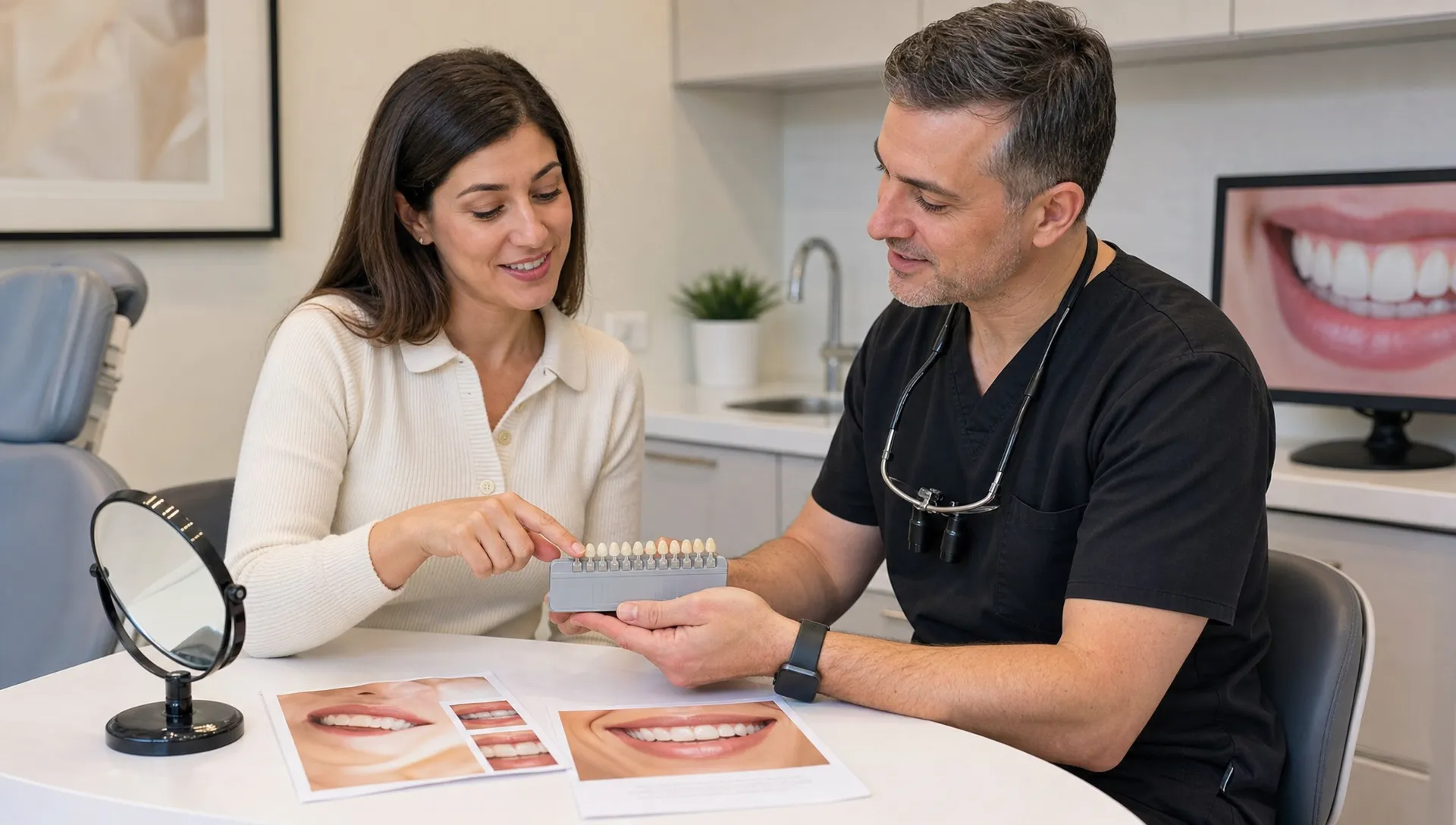
A cosmetic plan should be based on more than a mirror and a shade guide. The dentist may use photographs, digital scans or impressions, X-rays when appropriate, gum measurements, bite evaluation, and a detailed review of your medical and dental history. In some cases, a mock-up or temporary preview can help you see shape and proportion before committing to a final design.
For patients with gum inflammation, recurring decay, or concerns about the oral microbiome, advanced diagnostics can be especially useful. Oral biofilm testing and salivary diagnostics, when appropriate, can help identify risk factors that may affect the success and longevity of cosmetic care.
Good diagnostics do not make the process more complicated for the sake of it. They make the outcome more predictable. They also help avoid treating the visible problem while missing the underlying reason it happened.
Study before-and-after photos carefully
Before-and-after photos can be helpful, but they should be evaluated with a critical eye. Look for cases that resemble your own, not just the most dramatic transformations. If you have naturally small teeth, gum recession, older crowns, or a narrow smile, ask to see examples with similar starting conditions.
Pay attention to more than brightness. Do the teeth have natural variation? Do they fit the patient’s face? Are the gumlines healthy? Does the smile look good from different angles, or only in one highly polished photo? Do the restorations blend with surrounding teeth?
Also ask whether the photos show the dentist’s own patients. Stock images and heavily edited photos do not tell you much about clinical skill.
Use the consultation to test communication and trust
Cosmetic dentistry is personal. You are making decisions about your appearance, your health, and often a meaningful financial investment. A good consultation should feel collaborative, not rushed or pressured.
The right dentist should listen to what bothers you, explain what is realistic, discuss trade-offs, and give you time to make a decision. If you feel dismissed, confused, or pushed toward treatment before your questions are answered, pay attention to that feeling. Trust is a major part of healthcare, especially when your goals include both esthetics and whole-body wellness. Origin Dental Wellness shares more on that topic in its article about trust in medicine.
Use these questions to guide your consultation:
| Question to ask | Why it matters |
|---|---|
| What is the most conservative way to improve my smile? | Shows whether tooth preservation is part of the plan |
| What health issues should be addressed first? | Helps protect the longevity of cosmetic results |
| How will you choose the shade and shape? | Reveals whether the result will be customized |
| What materials would you use and why? | Connects esthetics, function, and biocompatibility |
| What maintenance will I need afterward? | Helps you understand long-term responsibility and cost |
| What are the risks or limitations in my case? | Builds realistic expectations before treatment begins |
A dentist who welcomes these questions is more likely to be a good partner in the process.
Watch for red flags before committing
Not every cosmetic dental experience is designed around long-term health. Slow down if you notice any of these warning signs:
- The dentist recommends treatment before completing a full exam
- You are shown only perfect smile photos that do not resemble your situation
- Every patient seems to receive the same size, shape, or shade of teeth
- The plan ignores gum disease, bite issues, grinding, or decay risk
- You feel pressured to make a same-day decision
- Risks, maintenance, and alternatives are not clearly explained
- The dentist cannot explain material choices or how they affect your health goals
A beautiful cosmetic result should not depend on pressure or guesswork. It should come from diagnosis, planning, skill, and clear communication.
Think about local follow-up and maintenance
Choosing a local cosmetic dentist can be helpful because natural-looking dentistry often involves planning visits, try-ins, adjustments, and maintenance. Even after treatment is complete, you may need professional cleanings, nightguard evaluation if you grind, stain management, or periodic polishing.
If you are comparing Tulsa providers, consider practical details such as appointment availability, the practice environment, the type of dentistry offered, and whether the team takes time to explain the health side of cosmetic treatment. If you are traveling for care, ask how many visits may be needed and what follow-up can be handled locally versus in-office.
Long-term success is not just about the day the final restoration is placed. It is about how well the result functions, how healthy the surrounding tissues remain, and how naturally the smile continues to age.
Why a holistic perspective can improve cosmetic outcomes
A holistic or biological approach can be especially valuable for patients who want cosmetic improvement without compromising health priorities. Natural esthetics and biological dentistry often overlap in important ways: preserving tooth structure, choosing biocompatible materials, reducing inflammation, supporting healing, and considering how oral conditions affect the rest of the body.
At Origin Dental Wellness in Tulsa, cosmetic dentistry is approached within a broader model of patient-centered dental care. The practice emphasizes whole-body health, biocompatible materials, advanced diagnostics, and natural treatment philosophies. That perspective can help patients pursue a smile that looks better while still respecting the body’s overall wellness.
Frequently Asked Questions
How do I know if a cosmetic dentist can create natural results? Look for case photos similar to your own, a conservative treatment philosophy, clear explanations of materials, and a consultation that evaluates gum health, bite, and tooth structure before discussing cosmetic options.
Are veneers the only way to get a better smile? No. Depending on your goals, whitening, bonding, reshaping, replacement of old restorations, or alignment options may be discussed. Veneers can be appropriate in some cases, but they should not be the automatic first recommendation for every patient.
What should I bring to a cosmetic dental consultation? Bring a list of concerns, photos of smiles you like and dislike, information about past dental work, and any history of sensitivity, grinding, gum disease, or material reactions. This helps the dentist understand both your esthetic goals and your health needs.
Can cosmetic dentistry be holistic? Yes, when the dentist considers whole-body health, uses biocompatible materials when appropriate, evaluates inflammation and oral bacteria, and avoids unnecessary removal of healthy tooth structure. The cosmetic plan should support health as well as appearance.
How long do natural cosmetic dental results last? Longevity depends on the treatment, materials, bite forces, home care, diet, gum health, and maintenance. Your dentist should explain expected upkeep and risk factors before treatment begins.
If you want a smile that looks refreshed rather than artificial, start with a dentist who treats cosmetic dentistry as part of whole-person care. To explore natural-looking cosmetic options through a health-centered approach, connect with Origin Dental Wellness in Tulsa.